Let's start with what you're actually worried about
You're not scared of the vibrator itself. You're scared your partner will think you're unhappy, or that you need them less, or that you're hinting they're not enough. You're worried they'll feel rejected or judged. You're running through worst-case scenarios in your head that almost certainly won't happen.
Here's what I know from fifteen years of working with couples: partners are usually relieved when this conversation finally happens. They've been thinking about it too, or they're just happy you're advocating for your own pleasure. The awkwardness is almost always on the inside of your head.
Why the conversation matters more than the vibrator
Lemon vibrators are great. But introducing one opens a bigger door: it signals that you can talk about sex without shame, that your pleasure matters, and that you're invested in the quality of your physical connection. Those three things are relationship-builders, not relationship-threats.
If you skip the conversation and hide a vibrator, your partner eventually finds out. Then the conversation happens anyway, but loaded with secrecy and hurt feelings. If you introduce it straightforwardly, you're modeling what healthy sexual communication looks like. That matters way more than the toy itself.
Timing: when to bring it up
Do not have this conversation during sex. Do not have it when you're angry about something else. Do not have it in the car five minutes before you're both late for work.
Good timing is: a calm evening when you're both relaxed and have time to talk for 20 minutes without interruption. You could bring it up while cooking, during a walk, or after dinner. The key is that you're face-to-face enough to read each other's reactions, but not so formally seated that it feels like a performance review.
Avoid starting the conversation if you're in a rough patch sexually or emotionally. Wait until things are solid again. This isn't about hiding; it's about choosing a moment when your partner is in the mental space to hear good news, not defensive news.
How to actually say it
Cut the buildup. Don't spend ten minutes explaining why you're bringing this up; just say it plainly.
"I've been thinking about trying a clitoral vibrator during sex, and I wanted to talk to you about it before I did anything." Done. That's the whole opening.
Then pause and let them respond. They might ask questions. They might be quiet. They might say "Yeah, let's do it." All of those are fine.
If they seem hesitant, lean into curiosity instead of defensiveness. "What are you thinking about?" is better than "You don't support my pleasure." Listen to what they actually say, not what you're afraid they mean.
Come from a place of "I want to explore this together" rather than "I need this because you're not satisfying me." The first is about expanding connection. The second is about deficiency. Your partner can feel the difference.
What to say if they react poorly
If your partner says something like "I'm not enough for you?" or "Are you not attracted to me anymore?", that's about their insecurity, not about what you said. You can address both at once:
"I'm attracted to you. This isn't about you not being enough. It's about me exploring something new. Most people feel better knowing their partner is having good sex, right?"
If they say something dismissive like "That's weird" or "I don't think we need that," you have a real conversation to have. It's not about the vibrator anymore. It's about whether your partner is willing to work on sexual connection with you. That matters. A good response: "I get that it feels unusual. Can we talk about what makes it feel that way?"
If your partner shuts down completely, you might have bigger relationship stuff to address. That's worth exploring with a therapist, ideally together.
The magic of showing them first
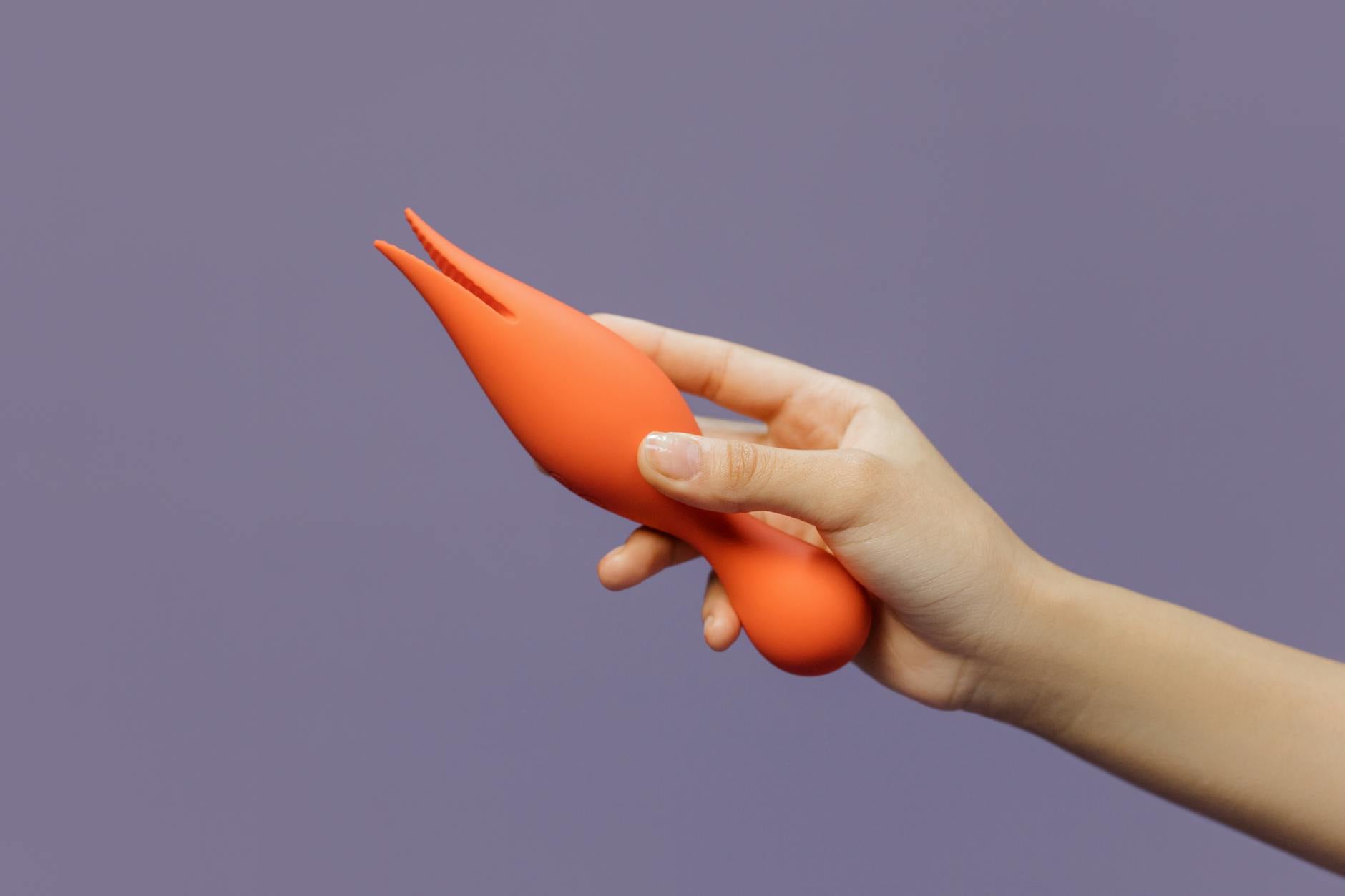
One of the most effective moves is to show your partner the vibrator before you use it during sex. Let them hold it. Explain how it works. Show them pictures or a video of how a lemon clitoral vibrator works. The abstract idea is scarier than the actual object.
You can frame it like this: "I found this thing called the Lem, and I'm curious about it. Want to see what it looks like?"
Physical objects are less threatening than concepts. Once your partner has held it and understood that it's just a tool, not a replacement, the weirdness usually evaporates.
How to frame it as team play, not solo behavior
This is where lemon vibrators work really well in partnerships. Unlike vibrators designed purely for solo use, many people with partners find that a lemon clitoral vibrator actually enhances partnered sex. You can emphasize that to your partner.
"I want to try this during sex with you. I think it could feel really good for both of us. I read that a lot of couples use them together."
Then actually follow through. When you do introduce it into sex, involve your partner from the start. Ask them to hold it. Let them control the speed. Make it collaborative. That turns it from something you're doing to yourself into something you're doing together.
What not to do
Don't apologize for wanting pleasure. Don't frame it as a last resort or a problem you need to solve. Don't over-explain or justify. Don't lead with stats or research trying to convince them it's normal. (Yes, it's normal. But that defensiveness is a tell that you think it's weird too.)
Don't hide it in a drawer and act surprised when they find it. Don't buy one behind their back as a surprise. Transparency now saves resentment later.
Don't make it a test of whether they love you. "If you really loved me, you'd be excited about this" is manipulation, even if it feels justified.
Why partners usually say yes
Most people want their partner to feel good. Full stop. If your partner loves you, they want you to have pleasure. A lemon vibrator isn't a threat to that; it's a tool that helps you get there faster. Many partners actually feel relieved when their partner brings this up, because it takes some pressure off them to be the sole source of orgasms or arousal.
Partners also often feel more attracted to someone who knows what they want and asks for it. Confidence about your pleasure is sexy. Shame about it is not.
The conversation after the conversation
If your partner said yes, great. If they're warming up to it, give them time. Don't push it into the bedroom immediately. You can text them a link to a Hello Nancy blog post about how lemon clitoral vibrators work with partners. You can send them a funny article about couples who use them. You're normalizing it through exposure, not through pressure.
When you do finally use it together, keep it light. Laugh if something feels awkward. Check in with them: "How does this feel?" Make it clear you're both still learning.
If your partner wants to wait longer, respect that. Some people need time to adjust to the idea. Three months from now they might be enthusiastic. That's okay.
When this conversation signals something bigger
If your partner refuses to have this conversation at all, or responds with anger, contempt, or control, that's worth paying attention to. Healthy partners can disagree about toys. They can't dismiss your sexuality entirely.
Similarly, if you're bringing this up because you're genuinely unhappy with your sex life and feel like you need a vibrator to make sex work, that's worth addressing separately. A lemon vibrator can improve an already good thing, but it can't fix a broken connection. That's therapy territory, and it's worth investing in.
For most couples, though, this conversation is easier than the buildup in your head. You're not asking for permission to cheat or to stop loving your partner. You're asking to deepen connection. That's a conversation most people are ready to have.
FAQ: Bringing up lemon vibrators with your partner
How do I know if my partner will be open to this?
You don't know until you ask. But people who have regular honest conversations about sex tend to be more open. If you've talked about what you both like in bed before, this is just the next conversation. If you've never talked about sex at all, that's the bigger problem to solve first.
What if my partner wants to use it alone with me first, before sex?
That's actually a really healthy boundary. Some partners want to see how you experience it and feel comfortable with the sensation before it becomes part of partnered sex. That's not rejection. That's them easing in.
Should I buy the vibrator before or after I talk to them?
After. Buying it beforehand signals that you've already decided, and you're just informing them. Talking first makes it a decision you're making together, even if the final choice is yours. That distinction matters for how your partner receives it.
Can I use a lemon clitoral vibrator during sex even if my partner seems uncomfortable about it?
Not immediately. Give them real time to adjust. If months go by and they're still actively uncomfortable, you have a conversation about whether this is a dealbreaker for you. It might be. You're allowed to have needs about your sexual pleasure.
What if they say yes but then seem disappointed or upset during sex?
Pause and check in. "You seem quiet. What's going on?" Maybe the reality felt different than they expected. Maybe they need reassurance. Maybe they realized they want more time. Listen without defensiveness. This is information about your partner, and it's valuable.
Is it weird to ask my partner to be the one to use the vibrator on me?
Not at all. In fact, that's a beautiful way to involve them. It keeps them active and engaged, and it often feels less threatening because they're still the ones touching you. The vibrator just amplifies the sensation.
What comes next
Introducing a lemon vibrator to your partner isn't the end of anything. It's the beginning of something: a partnership where both people's pleasure matters, where you can ask for what you want, and where you're willing to try things together. That's worth the awkward conversation. Your partner almost certainly thinks so too.