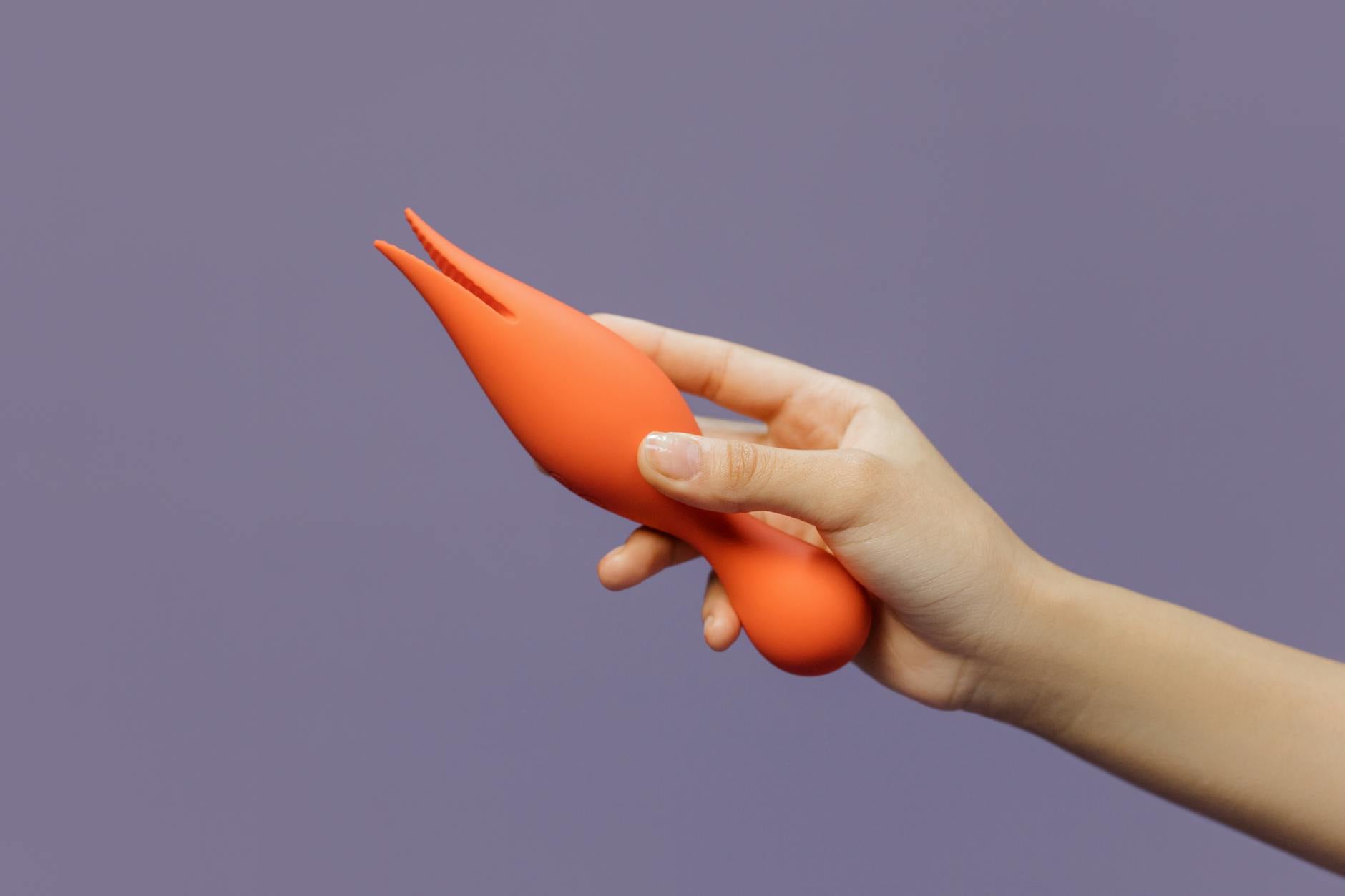
Let's talk about the thing nobody mentions in the waiting room
Your anxiety medication is probably saving your life. It's also probably making orgasms harder to reach. Both things are true at once. And both deserve attention.
The sexual side effects of SSRIs and anxiety medications are real, common, and rarely discussed by the prescribers who hand them out like they're vitamins. Up to 60 percent of people on these medications report some change in arousal, sensation, or orgasm timing. The person sitting next to you in the pharmacy line is dealing with this. Your best friend probably is too. And if you're reading this, so are you.
Here's what I've learned working with hundreds of people navigating this exact problem: the solution isn't choosing between your mental health and your sexual pleasure. It's understanding what these medications do to your body and then working with that biology, not against it. Lemon clitoral vibrators are a surprisingly smart tool for this. Not because they're magic. But because of how they work with the specific changes anxiety meds create.
What anxiety meds actually do to sensation
SSRIs and SNRIs change how your nervous system processes stimulation. Your brain gets better at managing anxiety and depression, which is the whole point. But the neural pathways that light up during arousal also get quieter. It's like turning down the volume on everything, not just the bad stuff.
This shows up in three main ways. First, arousal takes longer to build. What used to take five minutes now takes fifteen or twenty. Second, sensation feels muted. Touch that used to spark something now feels like white noise. Third, orgasm becomes distant. You might feel aroused, but the pathway to climax feels blocked or impossibly far away.
The medication isn't broken. Your body isn't broken. But the conversation between your nervous system and your genitals has changed. It needs a different kind of signal.
Why lemon vibrators work differently on medication
Most external vibrators use a buzzing pattern. That pattern is actually quite subtle for a nervous system that's running on serotonin reuptake inhibitors. It's like trying to wake someone up by whispering when they've got headphones in.
Lem vibrators use air-pulse suction stimulation. Instead of vibration, they create rhythmic suction that engages more nerve endings at once, and they do it with more intensity and directness than a traditional vibrator can. For people on anxiety meds, this matters. You're not trying to build sensation from scratch. You're trying to cut through to the neural pathways that still respond. Suction does that more efficiently than buzz.
Second, the intensity range on a lemon clitoral vibrator starts higher than most traditional vibrators. On anxiety medication, you often need to skip the gentle introduction and go straight to the signal your body can actually receive.
The protocol that actually works
Honestly though, just owning a lemon vibrator won't fix anything by itself. The real shift happens when you change how you approach pleasure.
Step one: Remove the orgasm deadline. This is critical. When your nervous system is on medication that delays climax, the minute you start watching for it, you've lost. Your brain tenses up. Your pelvic floor tightens. You create exactly the conditions that make orgasm harder. Set a time limit instead. Twenty minutes. Thirty minutes. Tell yourself you're exploring sensation, not chasing the finish line.
Step two: Warm up longer than feels necessary. Budget time for your nervous system to wake up. Ten minutes of foreplay solo, or with a partner. Touch your whole body. Let your skin register that pleasure is on the table. Then move to the lemon vibrator. Your body needs a runway.
Step three: Start at intensity levels three through five. Don't begin at one. Your medicated nervous system won't register it. Jump to the middle of the intensity range and work from there. You're not being greedy. You're speaking your body's current language.
Step four: Use suction, not just position. The lemon clitoral vibrator works best when you're actually allowing the suction to engage. Some people hold it too light, barely making contact. Let it seal. Let it pull. That's where the magic is. The sensation builds from the suction itself, not from the vibration pattern alone.
Step five: Expect the timeline to be long. Orgasm might take fifteen minutes. It might take thirty. It might not happen this time and be incredible next time. Stop expecting the timeline from before you were on medication. You're in a different body now. Both timelines are completely normal.
What changes when you stop fighting the medication
The people I work with who get the best results aren't the ones who think they can outsmart their medication. They're the ones who accept it's there and then engineer around it.
That acceptance actually shifts things. When you stop resenting the delay and start treating it as new information about your body, pleasure often comes back harder. You're not racing anymore. You're exploring. And exploration is where the really good stuff lives.
Some people find that using a lemon vibrator solo first removes the pressure of a partner's presence. Then later, when they've rebuilt their relationship with their own orgasm, adding a partner back in feels safer. That's a totally valid path.
Others find that naming the change to their partner changes everything. "My medication makes arousal slower now. I'm going to use the lemon vibrator to help signal my body. Can you help me feel less rushed?" That conversation, just by existing, often reduces the tension that was making everything harder.
When to talk to your doctor about this
Does your anxiety med have sexual side effects? Yes, probably. Should you stop taking it? No, unless your doctor tells you to. Should you mention this to your doctor? Absolutely.
A good prescriber knows this is a real side effect. They won't be shocked. They also might offer options. Some people switch to a different SSRI that affects arousal less. Some add a second medication that counteracts the sexual side effect. Some adjust the dose. Some stay exactly where they are and just need better strategies. All of those are legitimate choices.
Bring this conversation up. It matters. Your mental health and your sexual health are both real health. They're not competing.
The thing that actually changes
Here's what I've learned: taking an anxiety medication and having rich, powerful orgasms aren't mutually exclusive. They just require a different strategy. You need a partner, a tool, patience, and information. The lemon clitoral vibrator handles the tool part. The rest is you being willing to learn your body's new language.
Your pleasure doesn't have to be sacrificed for your mental health. Both can exist. And honestly, when you stop fighting the change and start working with it, sometimes what comes back is even better than what you had before.
People also ask
How long does it take to orgasm with a lemon vibrator when you're on SSRIs?
There's no single answer here. Some people reach orgasm in fifteen to twenty minutes. Others take thirty to forty-five minutes. And some days it doesn't happen, and that's completely normal too. The timeline is individual and also changes day to day based on stress, sleep, and how long you've been on the medication. Focus on sensation rather than timing and you'll feel less frustrated when the clock ticks differently than you expected.
Can you use a lemon vibrator if you're on multiple anxiety medications?
Yes. The same principle applies whether you're on one SSRI or two different medications. The more medications affecting your nervous system, the more you might need to adjust intensity or warm-up time, but the core strategy remains the same. If you're on multiple medications and orgasm has become really difficult, that's a conversation worth having with your prescriber too.
Does the lemon vibrator work better if you stop taking your anxiety medication during use?
Absolutely not. Never skip a dose to try to have better sex. That's not a workaround, it's a health risk. Your medication needs to stay consistent. The lemon clitoral vibrator is designed to work within the reality of you being medicated, not as a replacement for medication.
Will using a lemon vibrator regularly help your body adjust to the medication over time?
Possibly. Some people find that as they get used to their medication, and as they practice pleasure with tools like the lemon vibrator, sensation gradually improves. Others plateau and stay where they are. There's no guarantee. But exploring pleasure regularly definitely helps you understand your body's new baseline, which means better experiences overall.
What if a lemon vibrator feels too intense when you're on anxiety medication?
Start at intensity levels two or three instead of five. And absolutely make sure you're using water-based lubricant, which reduces friction and makes the experience feel less overwhelming. Some people also find that using the lemon vibrator over underwear first, before direct contact, helps their body acclimate. There's no shame in building up to the intensity. Your pleasure isn't a race.
Should you tell your partner you're using a lemon vibrator because of medication side effects?
That depends on your relationship and how you feel about vulnerability. If you have a partner, bringing them into the conversation can actually reduce shame and pressure. Something like: "My medication is making arousal take longer. I'm going to use a vibrator to help. It's not about you. It's me learning my body again." That honesty often brings couples closer, not further apart. But if you want to explore solo first, that's valid too.
If you're navigating the intersection of anxiety medication and pleasure, remember this: you're not broken. Your medication is working. And there are real strategies, tools, and conversations that can get you back to a place where orgasm feels possible and pleasure feels like something you deserve. The lemon clitoral vibrator is just the beginning. You're the real work. And that work is worth doing.