Let's start with what most people get wrong
There's this myth that pleasure is about intensity. Louder, faster, stronger equals better. But I've worked with hundreds of couples and individuals over decades, and I can tell you: the people reporting the most satisfying experiences are rarely chasing maximum. They're chasing precision.
Lower intensity isn't a compromise. It's often a gateway to sensation you didn't know existed.
Why gentle stimulation actually unlocks more
Your clitoris has roughly 8,000 nerve endings concentrated in a tiny area. Intensity can overwhelm that network. When you start gentler, you're letting those nerves wake up gradually instead of going into sensory shutdown.
There's also a psychological layer. If you've had partners who were rough, or you've spent years with vibrators that felt aggressive, your body learns to brace. Softer pressure signals safety. That alone changes what's possible.
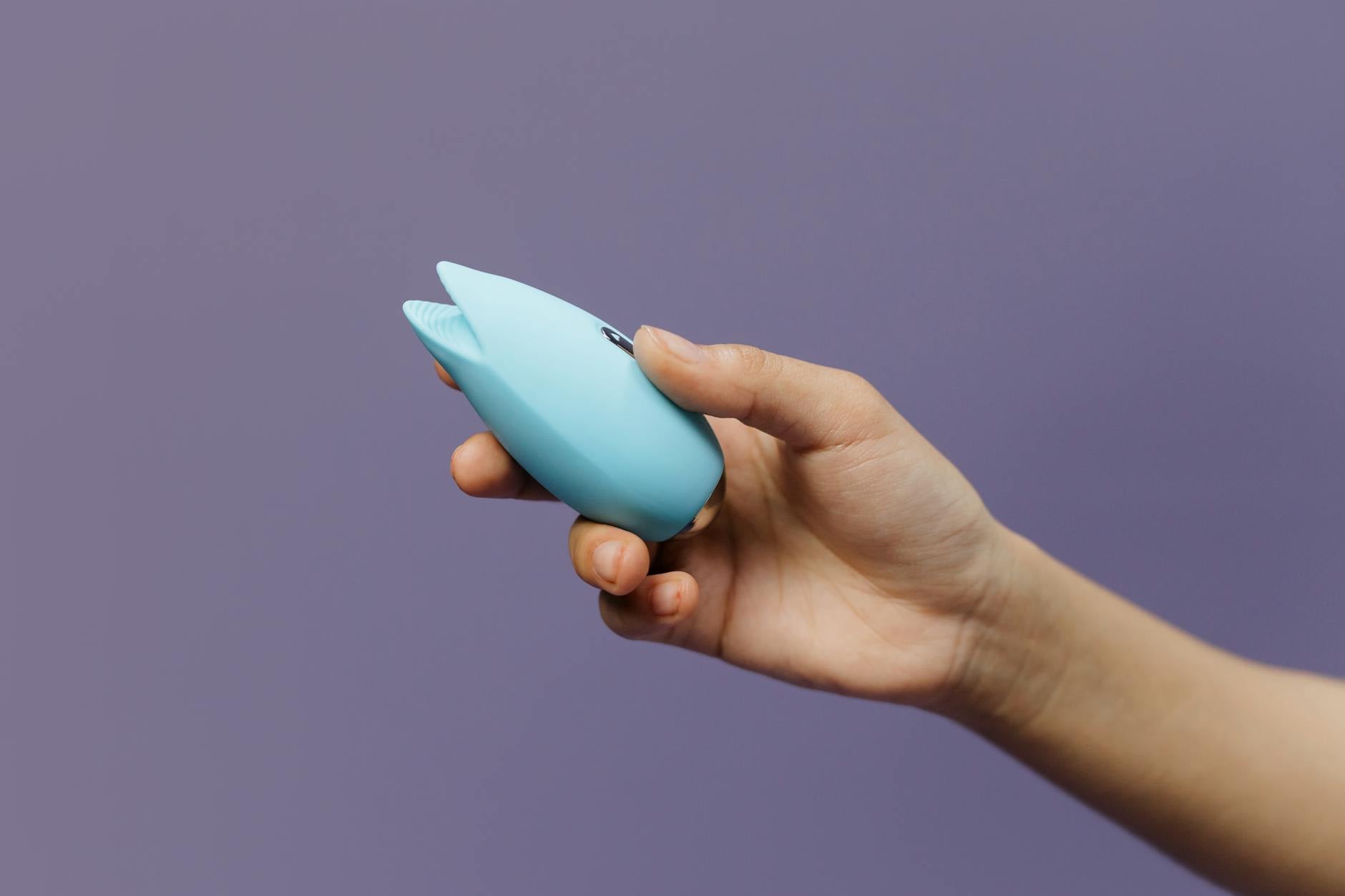
The lemon vibrator design addresses this directly. Unlike traditional vibrators that rely on motor speed, lemon clitoral vibrators use suction and pulsing patterns that feel more like gentle pressure than aggressive buzzing. The sensation is concentrating rather than overwhelming.
The intensity ladder: how to build sensation intentionally
If you're new to toys, or returning after a long time, skip the middle settings entirely. Here's the progression I recommend.
Week 1: Patterns, not power. Most clitoral vibrators have 2-5 pulse patterns (steady, waves, pulses, etc.). Spend 3-4 days exploring each pattern at the lowest setting. You're not trying to come. You're mapping what each feels like.
Week 2: Duration and awareness. Once a pattern feels familiar, use it for 10-15 minutes. Notice where you feel it (tip, sides, over the hood). Notice what your breathing does. This is building the mind-body connection that makes intensity irrelevant.
Week 3: Positioning experiments. The same vibrator feels completely different depending on angle and pressure. Direct contact, over your underwear, angled, held still, moved in circles. Five minutes in each position. You're discovering your actual sweet spot, not the toy's maximum capacity.
Week 4+: Intensity layering. Only after you've mapped sensation thoroughly should you touch the intensity dial. And you may find you never need to.
Why the lemon sucker changes everything
Traditional vibrators work through frequency. The clitoral vibrator market is obsessed with how many times per second something can buzz. But stimulation isn't about speed. It's about pressure and pattern.
Lemon's suction-based approach (sometimes called a "lemon sucker" design) creates a seal and applies gentle, rhythmic pressure. This feels less like buzzing and more like your body is being actively engaged, rather than passively stimulated. The sensation travels deeper instead of staying at the surface.
For people starting with lower intensity toys, this matters hugely. A suction-based lemon vibrator at setting 1 often delivers more satisfying sensation than a traditional vibrator at setting 3. You're not fighting your own body's response.
The warm-up you actually need
Here's where most people mess up: they apply the toy before their body is ready. Then they wonder why sensation feels muted.
Spend 10-15 minutes on foreplay. Not because you "have to." Because your clitoris actually engorges with blood flow, which makes sensation more vivid. When you're not fully aroused, you're trying to feel something in tissue that isn't primed for it.
If you're partnered, this is the conversation to have: you need slowness before you can use the toy effectively. If you're solo, the warm-up might be your own hands, time with your thoughts, reading something that turns you on, whatever gets your heart rate up.
Once you're genuinely aroused, introduce the lemon clitoral vibrator at the lowest setting. That's when you'll actually notice what it's doing.
Managing sensation creep (the sneaky problem)
Your body adapts to sensation. This is actually useful to know. After 15-20 minutes with the same pattern at the same intensity, you might notice sensation fades slightly. This is normal neural adaptation, not a sign something's wrong.
Two fixes: First, swap patterns. Novelty resets the adaptation response. Second, take breaks. Step back for 30 seconds. Let your clitoris reset. Then resume. You'll feel it sharply again.
This is why lower intensity is genuinely strategic long-term. If you start at high intensity, your only move when adaptation happens is to go higher. If you start low, you have room to shift patterns, angles, and intensity all as tools. You don't run out of options.
Lube changes everything (even with suction)
Water-based lube might seem unnecessary with a lemon sucker design since suction doesn't require slickness the way vibration does. But it matters. A tiny bit of lube (seriously, a dime-sized amount) reduces friction and lets the suction work more smoothly against your skin.
Don't overdo it. Too much breaks the seal. But a light layer changes the whole sensation from mildly pleasant to genuinely pleasurable.
The mental part (seriously underrated)
Intensity anxiety is real. Some people worry that needing a lower setting means something's wrong with them. It doesn't. It means you're in touch with your actual body, not performing for a theoretical ideal.
Others worry that "starting low" is boring. But boredom is just impatience. Once you commit to the 4-week progression I outlined, you stop waiting for something to happen and start noticing what's already happening. That shifts everything.
If you have a partner, this is worth discussing beforehand. "I'm exploring sensation intentionally, which means lower intensity and more time" is a conversation that actually deepens things, because it's about real communication instead of assumptions.
When to increase (and when not to)
There's no timeline. Some people spend months exploring lower intensities and never feel the need to go higher. Others naturally want to after a few weeks. Both are fine.
You increase intensity when: you've genuinely explored lower settings and they feel predictable. You want novelty that pattern-swapping alone isn't delivering. You're doing this from curiosity, not pressure.
You stay lower when: you're getting consistent, satisfying sensation. Your body is relaxed. Orgasms are happening. You're enjoying the experience. There's literally no reason to push higher just because a toy is capable of it.
FAQ: Lower intensity and lemon vibrators
Why does a lemon clitoral vibrator feel different from other toys at the same speed?
It's the mechanism. Suction-based stimulation concentrates pressure instead of spreading vibration across a wider area. You're getting more direct sensation even at lower intensities. For people new to toys or sensitive to overwhelming stimulation, this is a real advantage.
Can I use a lemon vibrator if I've never used a toy before?
Absolutely. In fact, starting with suction is smart. The sensation is more intuitive than buzziness. You're not fighting your own response. Just start at the lowest setting, give yourself real arousal time beforehand, and move through patterns before intensity.
How long before I feel something?
Some people feel it immediately. Others need 10-15 minutes for their nervous system to calm down enough to actually register sensation. If you're tense or distracted, you'll feel less. Give yourself 20-30 minutes of uninterrupted time. Your brain needs space to pay attention.
Is lower intensity less likely to give me an orgasm?
No. Orgasm isn't about intensity. It's about the right sensation, the right mental state, and enough time. Some people have their most intense orgasms with lower intensity toys because they're not bracing against overstimulation. Your nervous system stays engaged instead of shutting down.
What if I like high intensity once I've tried everything?
Then use high intensity. The whole point is that you've actually explored what you want instead of assuming you need maximum. If that's genuinely your thing, that's your thing.
Should I use a lemon clitoral vibrator during partnered sex?
That's a conversation with your partner. Some couples love it. Some prefer to save toys for solo time. What matters is that you're both genuinely interested, not doing it for show. If you do use it with a partner, lower settings are often easier because there's less chance of overstimulation interrupting connection.
The real win
Starting with lower intensity isn't settling. It's actually the smarter path to discovering what your body actually wants, not what you thought you were supposed to want. Helo Nancy's Lemons designed the lemon vibrator specifically to work beautifully at every intensity, which means you get to stay curious instead of chasing maximum sensation.
Take your time. Pattern before intensity. Arousal before the toy. Your pleasure is built on the foundation of actually paying attention, not on overwhelming your own system. That's when lemon vibrators become genuinely transformative.
If you're navigating this transition with a partner and want deeper conversation around intimacy and connection, reach out. That's what I'm here for.