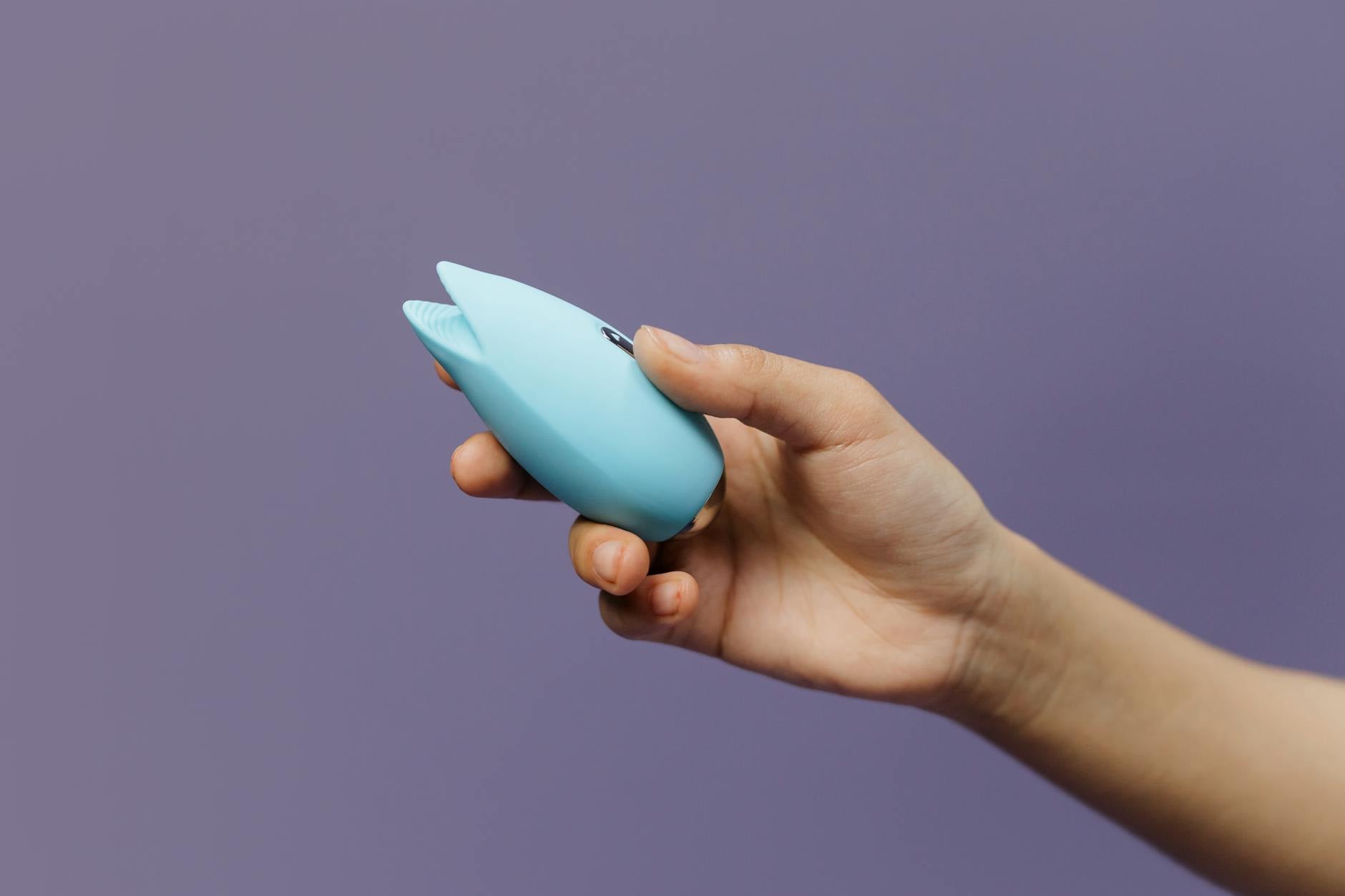
Here's the thing about arousal speed in couples
One of you is ready to go in five minutes. The other needs fifteen or twenty. This is not a problem with desire. This is not a sign your partner isn't attracted to you. It's biology, and it's wildly common, and it's been the quiet source of friction in more relationships than either of you realize.
Most couples try to solve this by one person waiting or one person rushing. Both feel terrible. Lemon vibrators for couples solve it differently. They let you both get there at your own pace without anyone being left behind, bored, or resentful.
Why arousal speed mismatches happen (and why it's not your fault)
Arousal isn't a single process. It involves the sympathetic nervous system (your heart rate, blood flow, breathing) and the parasympathetic system (relaxation, ease, mental focus). One partner might have a faster SNS response. The other might need more parasympathetic activation first. Add stress, fatigue, medication side effects, hormonal cycles, or past relationship trauma, and the gap widens.
People with vulvas, on average, take longer to reach peak arousal than people with penises. This isn't universal, but it's common enough that if you're in a penis-vulva partnership and you're feeling out of sync, you're in good company. The mismatch becomes a problem not when it exists, but when you treat it like one person needs to change instead of designing a system where both people can be satisfied.
Lemon clitoral vibrators change the math because they let the slower-to-aroused partner access intense stimulation on their own timeline while the faster partner stays engaged without pacing themselves down.
The two-speed scenario most couples face
Partner A gets aroused quickly. They want to escalate. Partner B isn't ready yet. What usually happens next? Partner A waits, feels frustrated, checks their phone. Partner B feels rushed and then guilty for slowing things down. Within three minutes, the whole thing has a weird tension underneath it.
With a lemon vibrator in the mix, Partner B can start using one during foreplay while Partner A does what they'd naturally be doing anyway—kissing, touching, being present. Partner B gets the intense clitoral stimulation that might take their body twenty minutes to build naturally, but now it's happening in four to six minutes. Partner A stays aroused and engaged because there's actual momentum. When Partner B catches up, you're both at the same level of readiness. Then you move into penetration or partnered stimulation from a place of actual synchrony, not a place of one person managing the other person's timeline.
How to position a lemon vibrator for couples play
This is practical, not fancy. During foreplay, Partner B can hold it themselves, or Partner A can hold it and apply it while kissing or touching Partner B's chest and neck. The Lem's design is small and handheld, which means it doesn't need a harness or mounting. Partner A controls the rhythm and intensity if they're holding it. Partner B controls it if they need to manage sensitivity or angle.
Some couples find it works best if Partner B holds the vibrator and Partner A focuses on penetrative touch or kissing. Others prefer Partner A holding it so Partner B's hands are free to touch their partner. There's no wrong answer here. The first time you use it together, talk about which person wants to be in control of the vibrator, or if you want to switch. This removes the guesswork and keeps it from feeling awkward.
Timing and pacing: how to actually sync up
Start the vibrator early in foreplay. Not at the beginning, but maybe five minutes in, when Partner A is already engaged but Partner B is just warming up. Set it to a lower pattern first (most lemon vibrators have a few intensity levels). Partner A continues doing what feels good for them. Partner B focuses on the sensation and arousal feedback from the vibrator.
The goal isn't for Partner B to have an orgasm before you move into partnered sex. The goal is for Partner B's arousal to catch up so that when you transition, you're starting from a similar baseline. If Partner B's most reliable path to orgasm is with a vibrator, then using one now means you're building toward their pleasure instead of starting from a deficit.
Give it eight to twelve minutes before you escalate to partnered sex. Watch your partner's breathing and body cues. When Partner B starts to relax into it, when they're making sounds, when they're moving with the sensation, they're catching up. That's the signal to transition.
What changes if penetration is part of your sex
If you both want penetration, the lemon vibrator can keep working during it. Some couples use it during entry, then Partner A moves inside while Partner B uses the vibrator on the clitoris. Others apply it to the vulva from the outside while penetration happens. The clitoral nerve density means that external stimulation often enhances penetration without interfering with it.
If Partner B is on top, they can angle forward slightly and use the vibrator themselves. If Partner A is on top, they can apply it while moving. If you're side-by-side, partner B can easily reach to use it. The point is that the vibrator doesn't have to pause. Pleasure doesn't have to be compartmentalized into "foreplay" and "real sex." Lemon vibrators integrate into all of it.
Communication without making it clinical
Here's where most couples get stuck. They're embarrassed to talk about the arousal speed mismatch, so they never actually address it. Using a vibrator together forces you to talk about it, which feels vulnerable.
Start with something simple: "I want to try something that might help us sync up better." That's it. You don't need a long explanation. Bring it up outside the bedroom. "I was thinking, on nights when we're in different places arousal-wise, what if we tried using a lemon vibrator together? That way you're not waiting for me, and I don't feel rushed." Most partners will respond with relief because they've been feeling the same thing.
During the experience, the communication can be nonverbal. Sounds, movement, a hand on your partner's chest. If something isn't working, pause and say it clearly: "I want to slow down for a second" or "A bit more pressure." The vibrator isn't there to skip over conversation. It's there to make the conversation simpler because you're both getting pleasure instead of one person managing the other.
Why this matters beyond just the sex itself
When one partner is always waiting or the other is always rushing, it builds a quiet resentment. Not because either person is bad. Because the system isn't designed for both of you. Over months or years, that resentment leaks into other conversations. You start to feel less seen, less desired, less understood. Using a lemon vibrator together is about more than simultaneous orgasms. It's about saying, "Your pleasure and your timeline matter equally to mine."
Couples therapists call this responsive desire versus spontaneous desire. One partner needs external stimulation to feel aroused. The other feels desire first and then gets aroused. Both are real. Both are valid. A lemon clitoral vibrator is just the tool that lets both people operate from their natural baseline without one person having to perform or suppress.
After a few times, you'll both know what to expect. Partner B will know that the vibrator gets them to the same arousal level by the time Partner A is fully ready. Partner A will know that they can stay present and engaged because there's actual movement happening. The timeline stops feeling like a problem and starts feeling like your rhythm.
When to use this and when not to
Use it when you're in different places arousal-wise. Use it if one partner typically needs a lot of foreplay and the other gets impatient. Use it if you want to explore partnered stimulation without feeling like someone is falling behind.
Don't use it as a substitute for actual communication about desire or attraction. If the real issue is that one partner doesn't want to have sex as often as the other, a vibrator isn't going to solve that. That's a conversation about frequency and priorities, and it needs to happen separate from the bedroom. But if you both want to have sex and you're just out of sync on the timeline, this works.
Setting up the first time
Talk about it beforehand. Make sure you both have the vibrator (like the Lem) charged and ready. Set aside time when you're not tired or stressed. The first time you use it together, things might feel awkward. That's normal. You're adding a new element, and your brain is still getting used to coordinating a vibrator alongside everything else.
Start with lower intensity patterns. You can always turn it up. You can't un-intensify something if it's too much. If sensitivity is an issue, use water-based lubricant with the vibrator. If the angle doesn't feel right, shift positions. There's no failure mode here except not trying.
What happens after
Some couples use a vibrator every single time they have sex. Others use it occasionally, when they know they're in different headspaces. Some find that after a few months of using it, their arousal timelines actually shift and become closer. That's possible too. The nervous system adapts. What matters is that you both feel seen and satisfied in the moment.
The real win isn't the vibrator. It's the conversation that using it requires. It's the explicit acknowledgment that your pleasure matters as much as your partner's, and you're both willing to design a system where that's true.
Frequently asked questions
Can we use a lemon vibrator if one partner has a lot of sexual trauma?
Yes, but slowly. Trauma can make shared sexual experiences feel threatening, even when both people want to be intimate. Introduce the vibrator as a tool for your own pleasure first, alone, so your nervous system gets used to it. Then bring it into partnered sex when you both feel ready. Go slow. Pause if anything feels off. Consider working with a trauma-informed sex therapist if the anxiety around partnered sex is high. The vibrator is a tool, not a fix for deeper wounds.
What if my partner feels threatened by the vibrator?
This is common and worth naming directly. Some partners worry that a vibrator means they're "not enough." That's not true, but the feeling is real. The conversation is: "This isn't about you being bad at sex. This is about my body needing a different kind of stimulation to get aroused quickly. You're still the person I want to be with, and this just lets us both be satisfied." Many partners feel relief once they understand that a vibrator during foreplay actually takes pressure off them to manually stimulate their partner for twenty minutes. You're not replacing them. You're syncing up.
Is it okay to keep using a lemon vibrator if one partner finishes earlier?
Completely okay. Not everyone cares about finishing at the same time, and that's fine. If Partner A orgasms first, they can keep touching, kissing, or holding the vibrator on Partner B until Partner B gets there too. Or you can pause, rest, and move into a second round. Orgasm is not a finish line. It's a sensation. Design your sex life around mutual pleasure, not synchronized climaxes.
Can we use lemon vibrators if we have different sexual preferences?
Lemon clitoral vibrators are really specific tools for clitoral stimulation, so they work best if that's part of what you both want. If one partner is into penetration and the other is into clitoral stimulation, the vibrator helps bridge that gap because it means both sensations can happen. If one partner doesn't want penetration or clitoral stimulation at all, then a vibrator might not fit your dynamic. That's a conversation about what you both actually want, separate from the tool.
What if we're embarrassed to buy one together?
Order it online and have it shipped to your house. Open it together when you're in a low-pressure moment. Look at it, talk about it, charge it. Making it normal ahead of time removes some of the awkwardness. You're not doing anything wrong. You're taking your pleasure seriously. That deserves to feel straightforward, not shameful.
Do we need to clean it between each use?
Yes. Rinse it with warm water and a bit of mild soap after every use. If you're sharing it between partners, clean it before passing it over. Silicone is easy to maintain and durable. A quick rinse takes thirty seconds and keeps everything hygienic and happy.
Use lemon vibrators for couples not because something is broken in your relationship, but because you both matter equally. Your pleasure, your timeline, your needs. When you design sex around that principle, everything else clicks into place.