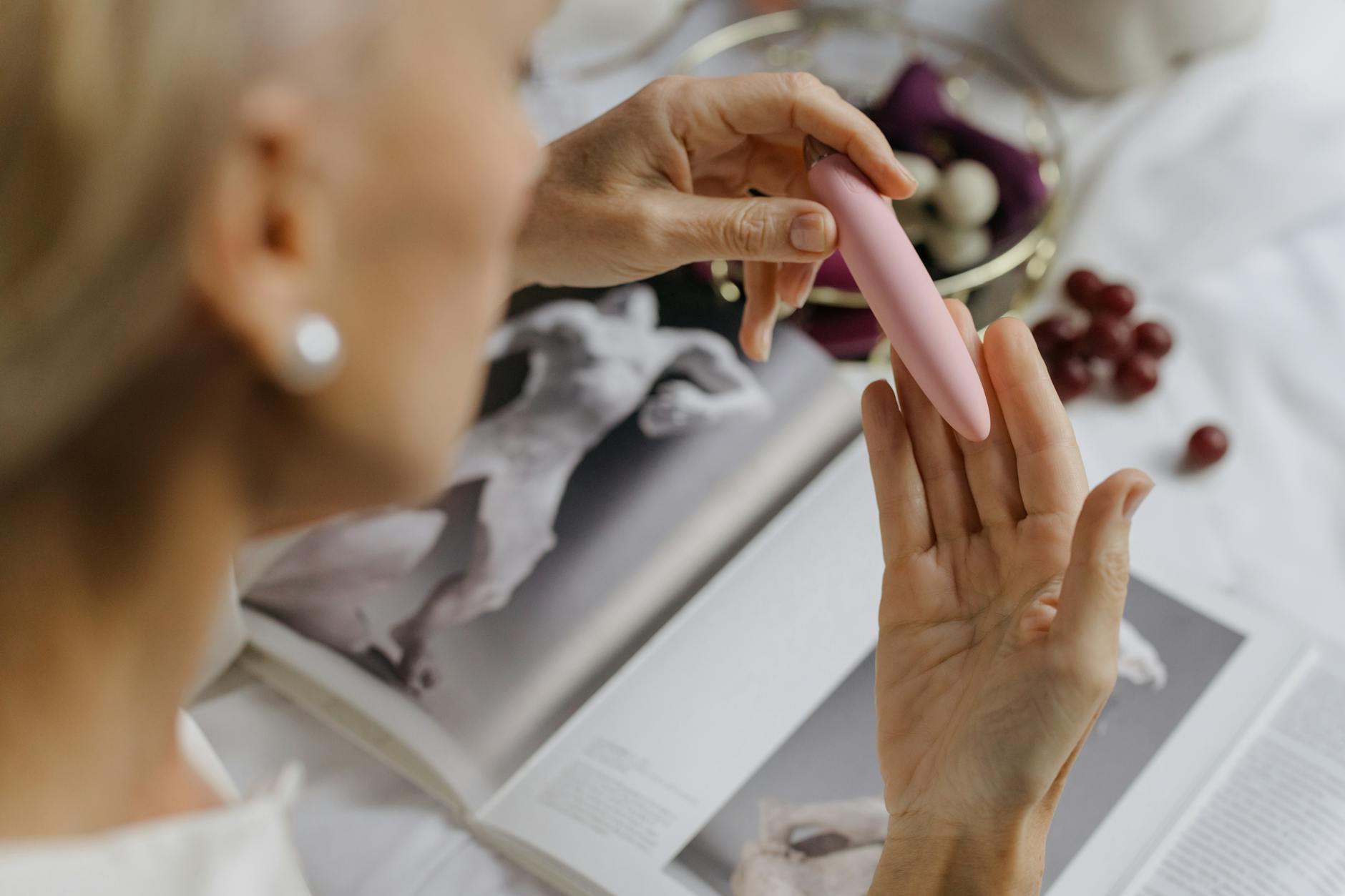
Here's the thing about pleasure after trauma
Your body isn't broken. It's protecting you. After sexual trauma, the nervous system can hijack pleasure as a safety measure. Arousal feels unsafe because arousal was unsafe. That's not dysfunction. That's survival.
Rebounding into pleasure isn't about forcing your body to relax or "getting over it." It's about slowly, deliberately teaching your nervous system that pleasure on your own terms is different. That you're in control. That you can stop whenever you need to.
Clitoral vibrators like the lemon vibrator (often called the Lem) can be a powerful tool in this process. Not because they're magic, but because they work with your body's actual physiology in a way that feels predictable, boundaried, and entirely yours.
Why clitoral vibrators work for trauma recovery
Let's start with the neurology. When you use a clitoral vibrator like the Lem, you're engaging a direct, measurable stimulus. You choose the intensity. You control the timing. You can stop it instantly.
This matters because trauma often involves a loss of agency. Your body did something you didn't consent to. Rebuilding sexual autonomy means re-establishing control in a tactile, undeniable way.
Clitoral vibrators also bypass the internal/penetrative component entirely. Many trauma survivors find penetration triggering even when partnered sex feels okay, or vice versa. Solo pleasure with a clitoral toy removes that variable completely. You're working with external stimulation only, which means you're never in a vulnerable internal position.
The suction technology in tools like the Lem also creates a gentler sensation profile. Unlike traditional vibration, which can feel intense or overwhelming to a hypervigilant nervous system, suction stimulates the clitoris indirectly. You're not hammering the same nerves repeatedly. The sensation is broader, more diffuse, which many trauma survivors find more manageable than pointed vibration.
Starting small: the first session framework
If you're new to using a clitoral vibrator after trauma, your first goal isn't orgasm. It's just data.
Pick a time when you feel safe and unhurried. Not when you're anxious, not when a partner is in the other room creating time pressure, not when you're trying to "accomplish" something. Ideally afternoon or early evening when your nervous system is already awake.
Start clothed. Yes, really. Hold the Lem over your underwear first. Turn it on the lowest setting. Notice what it feels like. Does your body tense? Does your mind go somewhere else? That's data. Your nervous system is telling you what it needs.
Many trauma survivors find that sitting (rather than lying down) feels safer initially. You have better spatial awareness. Your legs aren't as vulnerable. Sitting also gives you easier access to stop if you need to.
Spend 2-3 minutes just getting used to the sensation at the lowest intensity. Don't push toward arousal. Just notice. This is about interoception. Rebuilding your ability to feel sensation without judgment or goal.
Deepening the practice over weeks
If that first session felt okay, the next step is gradually increasing skin contact. Try it over your underwear a few times. Then, when you're ready, try it directly on the vulva. Still on the lowest setting. Still sitting. Still no pressure to feel anything specific.
Many people discover that arousal returns gradually, often with surprises. You might feel a flutter in your belly before you feel genital sensation. You might notice your breath shifting before you notice wetness. You might have a full-body response that feels completely different from pre-trauma arousal.
All of that is normal. Trauma rewires the arousal pathway. Your body may now express pleasure in a different order or intensity than it did before.
If during any of this you feel flooded or panicked, stop immediately. This isn't failure. It's your nervous system communicating. Rest. Come back to it later, or not at all if you don't want to. The whole point is reclaiming choice.
Navigating the common friction points
Three things come up repeatedly with trauma survivors rebuilding solo pleasure.
First: Guilt or shame about using toys. If you were told your sexuality was bad, or if sex was weaponized against you, solo pleasure can feel like a transgression. It's not. It's reclamation. Using a lemon vibrator alone is one of the few sexual experiences where you have complete autonomy. There's nothing to feel guilty about.
Second: Dissociation. Many trauma survivors find that during sexual stimulation, their mind leaves their body. You might be using a clitoral vibrator like the Lem and suddenly realize you're thinking about your grocery list or aren't sure how much time has passed. That's a sign your nervous system is still in protective mode. When you notice dissociation, pause. Ground yourself. You could name five things you see, four you can touch, three you hear. Then restart at a lower intensity or come back another day.
Third: Difficulty reaching orgasm even when arousal builds. Trauma can create a disconnect between arousal and climax. Your body gets turned on but can't quite cross the finish line. This isn't uncommon and isn't permanent. Sometimes working with a sex therapist trained in trauma (somatic experiencing or sensorimotor psychotherapy) can help. Sometimes it just takes time and patience with yourself.
When to involve a professional
Solo pleasure work is healing, but it's not therapy. If intrusive thoughts come up during stimulation, or if you find yourself unable to use a vibrator without panic or severe dissociation, talking to a trauma-informed therapist is worth it.
A good therapist can help you understand what's happening in your nervous system and work with it specifically. They can also help you distinguish between "my nervous system still needs time" and "I'm re-traumatizing myself." Those feel different, and a professional can help you recognize the difference.
The long view: pleasure as resistance
Here's what I want you to know. Reclaiming solo pleasure after trauma is not frivolous. It's not indulgent. It's radical. It's you telling your body and your history that pleasure belongs to you. That your nervous system can be safe again. That stimulation doesn't have to mean violation.
Using a lemon clitoral vibrator like the Lem alone is you saying: I choose this. I control this. My body belongs to me.
Take your time with it. There's no timeline for healing. There's no "right" pace. Some days using a vibrator will feel grounding and empowering. Some days the thought of it will feel like too much. Both are fine.
Your job is just to stay curious and patient with yourself. Your body is learning that pleasure can be safe. That takes repetition. That takes kindness. That takes time.
Frequently asked questions
Can I use a clitoral vibrator like the Lem if I still feel triggered during arousal?
Yes, but start very small. Use it over clothing. Use it for 60 seconds at the lowest setting. The goal isn't arousal. It's nervous system regulation. You're teaching your body that vibration doesn't equal threat. Many trauma survivors find that repeated micro-exposures to safe stimulation gradually retrain the nervous system. If you consistently feel panicked, that's a sign to work with a trauma-informed therapist alongside solo exploration.
How often should I be using a lemon vibrator for trauma recovery?
There's no prescription. Some people find daily 5-minute check-ins helpful. Others do it twice a week. The only rule is that it should feel chosen, not obligatory. If you're forcing yourself because you think you "should," that's not trauma-informed practice. It's just recreating pressure. Use it when you genuinely want to, without judgment about frequency.
What if I still can't reach orgasm after weeks of using a vibrator?
Orgasm isn't the goal right now. Pleasure is broader than climax. You might be rebuilding sensation awareness, nervous system safety, or just learning to feel your body without judgment. Some people's orgasm response returns slowly after trauma. Some people find it returns differently. If orgasm matters to you and it's still elusive after consistent practice, working with a sex therapist can help identify what's blocking it.
Should I tell my partner I'm using vibrators for trauma recovery?
That depends on your relationship and your safety. If you have a partner who respects your autonomy, knowing might deepen their understanding of your healing. If disclosure feels unsafe or like it will create pressure, you don't owe that information. Solo pleasure is solo for a reason. You get to decide who knows and when.
Can a clitoral vibrator like the Lem help me with partnered sex eventually?
Absolutely. Solo exploration with a vibrator teaches you what feels good on your terms. That knowledge is powerful in partnered sex. You're learning your own pleasure map. You'll know what to ask for, what to avoid, what turns you on. You might eventually use the vibrator with a partner if that feels right. You might not. The point is you'll know your own body's language.
Is it normal for sensation to feel different or numb when using a vibrator after trauma?
Very normal. Trauma can numb sensation as a protective response. Your nervous system might not be ready to feel everything yet. You might find that after using a vibrator consistently, sensation gradually sharpens. You might also find that sensation stays different, and that becomes your new normal. Both are okay. Listen to your body's timeline, not a predetermined schedule.
What comes next
Rebounding into pleasure after trauma isn't linear. You'll have days when solo exploration with a lemon vibrator feels empowering and grounding. You'll have days when the thought of it feels like too much. That's not regression. That's just how healing works.
The key is staying patient and radically honest with yourself about what your nervous system needs on any given day. If you want support navigating this, reach out. Professional guidance from a trauma-informed therapist or counselor can be transformative alongside your solo practice.
Your pleasure matters. Your body deserves safety. You're already taking the first step by exploring what that feels like.
References and resources
van der Kolk, B. (2014). "The Body Keeps the Score: Brain, Mind, and Body in the Healing of Trauma." Viking.
Porges, S. W. (2021). "Polyvagal Theory: Neurophysiological Foundations of Emotions, Attachment, Communication, and Self-regulation." W.W. Norton & Company.
Kaplan, H. S. (1979). "Disorders of Desire and Other New Concepts and Techniques in Sex Therapy." Brunner/Mazel.
National Sexual Assault Hotline: 1-800-656-4673 (RAINN). Available 24/7 for confidential support.