Let's name what's actually happening
Your partner doesn't want to have sex. Not right now, not lately, maybe not for months. And you do. That gap between wanting touch and not getting it sits heavy in your chest every single day. The rejection stings even when you logically know it has nothing to do with you.
Here's what I see in my practice: people in this situation often abandon their own pleasure entirely. They stop touching themselves. They stop wanting anything. They shrink. And then they resent their partner for the shrinking, which makes everything worse.
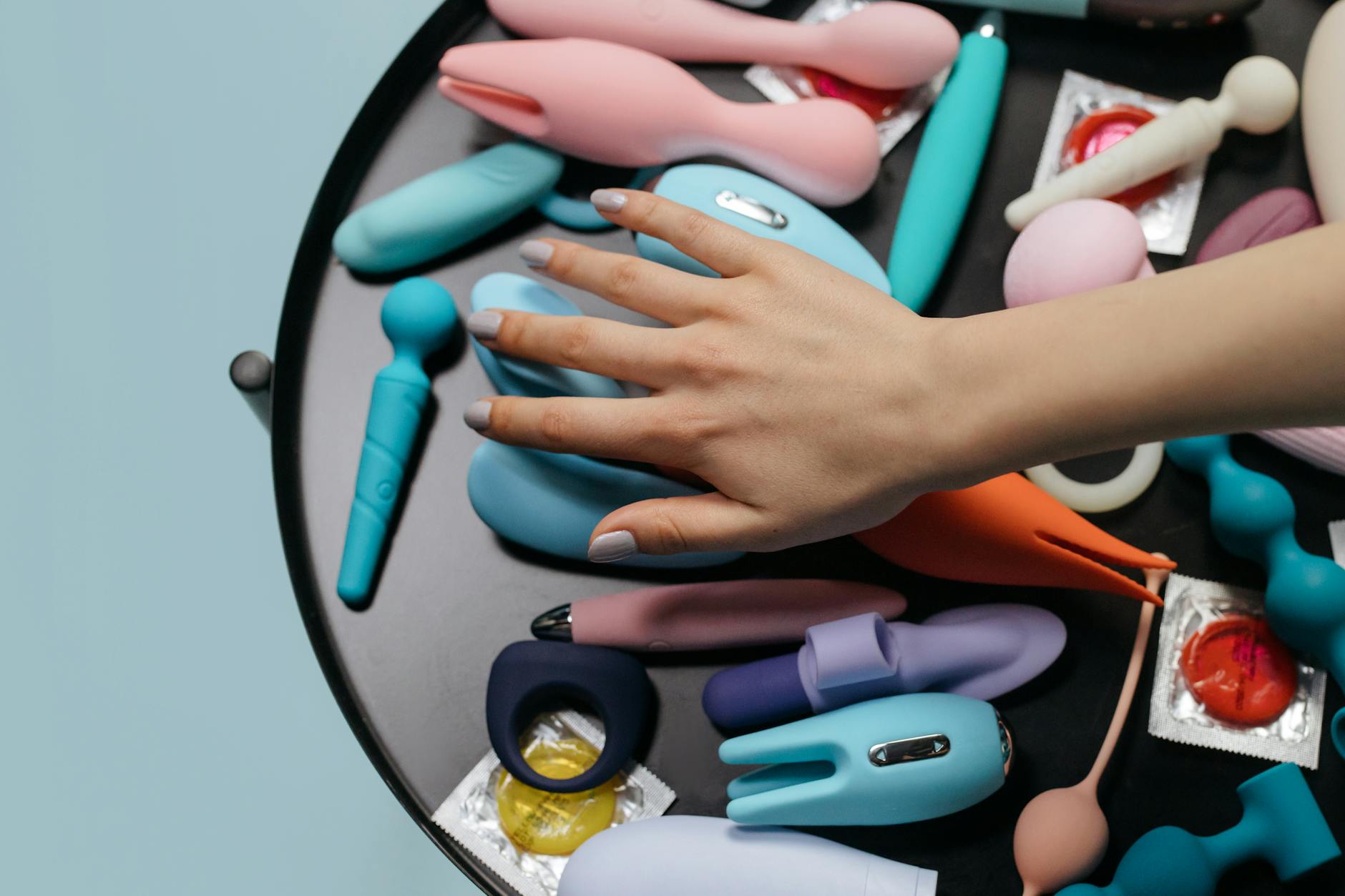
Using a lemon clitoral vibrator during this season isn't about replacing your partner. It's about not disappearing while you figure out what's actually going on.
Why your partner is pulling back (the real reasons)
Partners avoid intimacy for roughly three reasons, and each one requires a different conversation.
Stress, depression, or burnout. The brain goes offline when the nervous system is overwhelmed. Sex doesn't feel good. Touch feels like one more demand on an already depleted person. This is the most common scenario. It's not about attraction. It's about bandwidth.
Relational distance that predates the sex avoidance. You've stopped talking. There's resentment sitting between you. You feel like roommates. Sex can't exist in that climate because sex requires some baseline of goodwill and vulnerability. This one is harder but fixable if both people want to fix it.
Desire mismatch or a shift in sexuality. Sometimes people realize their sexual orientation has changed, or they've never actually wanted sex as much as they performed wanting it, or they need something specific that hasn't been named. This requires a very different conversation than either of the above.
Before you touch yourself with one of Helo Nancy's Lemons vibrators, figure out which of these three is actually true. Ask. Not accusingly. Not during sex (or the attempt at it). Separately, calmly, when you're both fed and rested: "I've noticed we're not connecting physically. I'm wondering what's going on for you." And then listen without fixing.
What solo pleasure actually does for you right now
When your partner is avoiding sex, your nervous system is stuck in a weird place. You're experiencing rejection regularly, which activates the same pain circuits as physical injury. Over time, you start bracing against it. You stop initiating touch altogether, not just sex. You become touch-starved in your own body.
Using a lemon vibrator during this period does three specific things:
It reminds your body what pleasure feels like. Pleasure isn't just about orgasm. It's about your nervous system remembering that good sensation exists. When you've been rejected repeatedly, your body starts to expect no. Solo pleasure interrupts that loop.
It gives you a container for the loneliness. This sounds counterintuitive, but touching yourself intentionally is sometimes easier than waiting for someone else to touch you. You're not waiting. You're not performing. You're just present with what feels good. That shift from passive waiting to active choosing is enormous.
It prevents resentment from calcifying. Resentment grows in the gap between what we need and what we're getting. If you're getting nothing, resentment metastasizes. Solo pleasure doesn't solve the relationship problem, but it stops you from building a secondary problem: hating your partner for leaving you touch-starved.
How to actually use a lemon vibrator when your relationship is strained
The mechanics are straightforward. The emotional landscape is more complex.
First: pick a time when you won't be interrupted. You need to be able to relax. If your partner is home and might walk in, or if you're waiting for them to come home, your nervous system stays braced. Pick a time when you're genuinely alone. Solo pleasure requires solitude, not just privacy.
Second: go slow and exploratory. You're not racing to orgasm. You're reconnecting with sensation. Start with the lowest setting on your lemon clitoral vibrator. Spend time noticing what different patterns feel like. This is especially important if you've been disconnected from your body for a while.
Third: be honest about the emotions that come up. Sometimes it's grief. Sometimes it's anger. Sometimes it's relief that feels wrong and then shame about the relief. All of that is normal. Don't narrate it to your partner later unless it's genuinely relevant to a conversation you're already having.
Fourth: don't use this as foreplay for partnered sex that won't happen. That's a setup for heartbreak. This time is for you. If your partner later wants to be involved, that's a separate thing entirely.
The conversation that has to happen
At some point, probably soon, you need to talk to your partner about why they're avoiding intimacy. Not in the moment. Not during an argument. Separate, structured, calm.
You might say: "I love you and I'm not going anywhere, but we're not connecting physically and I need to understand what's happening. I'm wondering if there's something going on for you that I should know about."
If the answer is stress or depression, the next move is supporting them in addressing that while also being clear that you can't carry both their healing and yours indefinitely. That might mean therapy, together or separately. It might mean them talking to their doctor. It might mean a deliberate reconnection project with a timeline.
If the answer is relational distance, you're looking at couples work. Real couples work, not just talking at each other. A good therapist can help you rebuild the trust and communication that sex requires.
If the answer is a shift in sexuality or desire, that's a bigger conversation about compatibility and whether you both want to stay in this configuration. And that's okay. That's important information.
What's not okay is staying indefinitely in a situation where you're touch-starved and waiting for your partner to change their mind. That's not loyalty. That's slowly disappearing.
The middle ground while things shift
Maybe your partner is working on their stuff. Maybe you're in therapy. Maybe things are slowly improving but it's taking time. The middle ground can last weeks or months, and you need a way to stay intact during it.
That's where a lemon vibrator becomes part of your self-care ritual, the same way a bath or a walk does. It's a non-negotiable way you're taking care of your nervous system while the relational work happens around you.
You're allowed to have pleasure while your relationship is difficult. You're allowed to take care of your body. You're allowed to not disappear while your partner figures their stuff out.
When nothing is changing
If your partner is avoiding intimacy and not willing to address why. If they're dismissive or defensive when you bring it up. If months pass and nothing shifts. If you're using a lemon clitoral vibrator as a substitute for actual partnership rather than a bridge while things heal.
That's information. Not judgment. Just information.
I work with a lot of people in long-term partnerships where one person has lost interest in sex entirely. Sometimes it's temporary and fixable. Sometimes it's a fundamental incompatibility that neither person wants to name. Sometimes people are grieving a loss together. Sometimes one person checked out emotionally and can't find their way back.
Solo pleasure is not a solution to any of these situations. It's a way to survive them with your nervous system intact while you figure out what you actually want to do.
FAQ: Partner avoidance and your pleasure
What if my partner finds out I'm using a lemon vibrator and gets angry?
That's a boundary issue, not a pleasure issue. Your body belongs to you. Your solo sexuality is not conditional on your partner's approval. If they're angry that you're taking care of your own pleasure while they're avoiding you, that's actually the relationship problem you need to address directly. That anger often masks shame or control patterns. A therapist can help you navigate that conversation.
Is using a lemon sucker while my partner avoids sex cheating?
No. Solo pleasure is not infidelity. Infidelity is a betrayal of trust, usually involving deception and another person. Touching yourself is not a betrayal. It's not even a risk factor for cheating. In fact, people who have a healthy relationship with their own pleasure tend to have more stable partnerships.
How long should I wait before the intimacy improves before I accept it might not?
That depends on what the underlying issue is and whether your partner is actively addressing it. If they're in therapy or getting treated for depression, give it a few months. If they're doing nothing and nothing is changing, you probably already know the answer. Trust that.
Can we use lemon vibrators together if they're avoiding partnered sex?
Maybe. But I wouldn't lead with that. The avoidance is telling you something is off. Introducing toys before addressing why they're avoiding sex usually backfires. It feels like pressure. Get curious about the avoidance first. The toys can come later if reconnection is what you both want.
My partner says they don't want me using vibrators because they're insecure. What do I do?
You're at a crossroads. You can either abandon your own pleasure to manage their insecurity, or you can have a hard conversation about boundaries. I'd recommend the hard conversation. His insecurity is not your responsibility to fix by disappearing. You can be compassionate and firm: "I care about your feelings and also I need this for my own well-being." If he can't move through his insecurity, that's separate work he needs to do.
Is it normal to feel guilty about having pleasure when my partner isn't interested in sex?
Completely normal. Guilt often shows up when we're breaking a pattern, even when the pattern was hurting us. You might have internalized the idea that your pleasure should only exist in relation to your partner's. That's worth examining. Your pleasure is valid regardless of their interest level.
The actual next step
If you're in a situation where your partner is avoiding intimacy, using a clitoral vibrator from Helo Nancy's Lemons is the smallest step. The bigger step is having an honest conversation about what's happening and what you both actually want.
Solo pleasure keeps you grounded while that happens. It's not a replacement for partnership. It's a way to not lose yourself while you figure out if partnership is still possible.
If you're ready to have that conversation and need support, reach out. That's what I'm here for.