Let's name the thing nobody wants to talk about
Your partner isn't interested in sex right now. Maybe ever again. And you are. This is one of the most isolating positions a person can occupy in a relationship, partly because admitting it feels like a betrayal of the person you love. Between you and me, it's neither rare nor unsolvable. It's just uncomfortable to sit with.
Here's what I know from decades of working with couples: desire mismatch is the second most common source of relationship strain after unresolved conflict. And unlike conflict, which gets addressed through conversation, desire mismatch often gets buried. You pretend you're fine. Your partner pretends they don't notice the pretending. Nothing changes. Everyone feels increasingly alone.
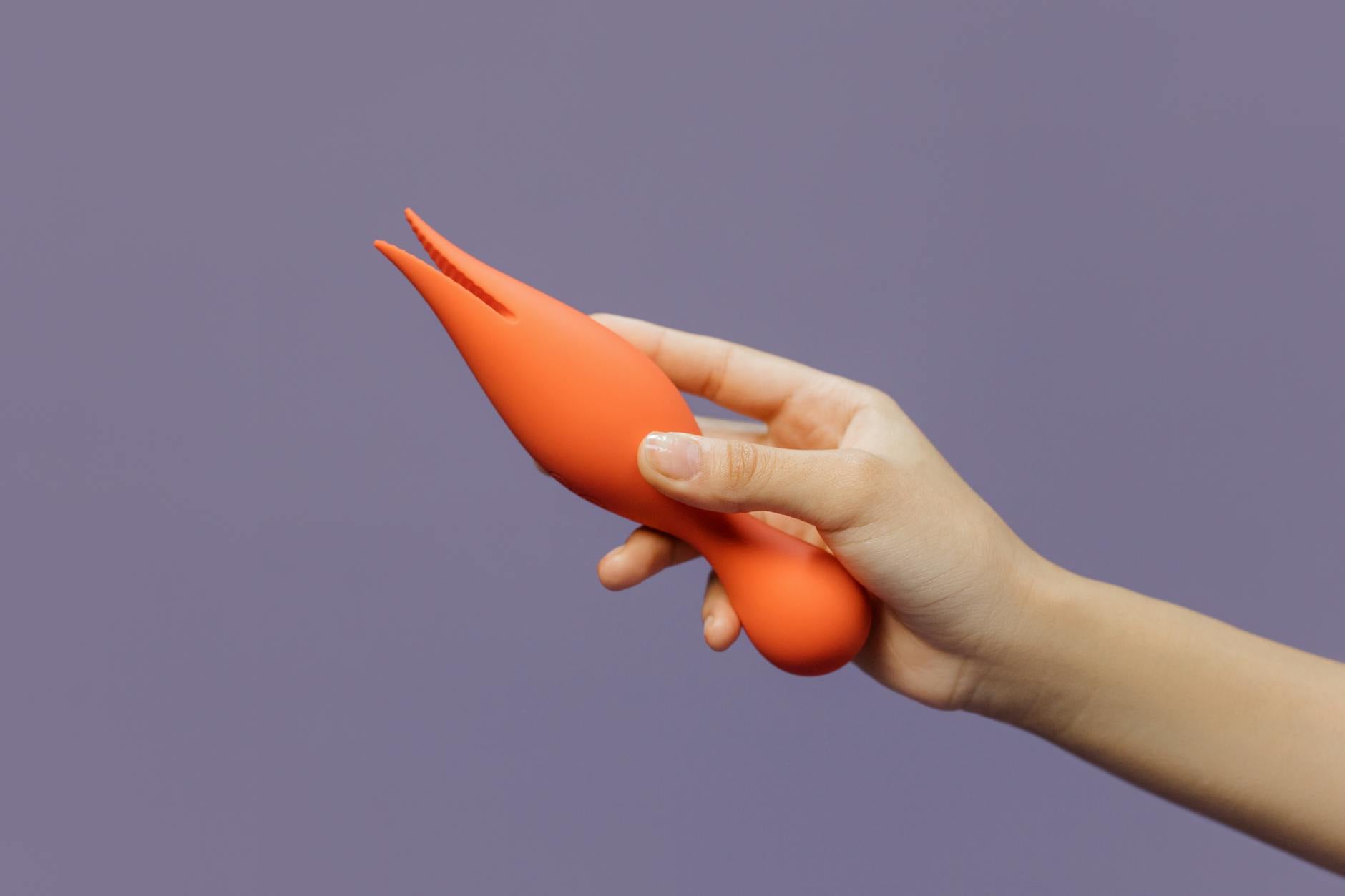
The good news is that lemon vibrators and other clitoral vibrators can be part of a solution, but only if you use them as a tool for honoring yourself, not as a workaround that lets you avoid the actual conversation.
The difference between coping and connecting
Let me separate these two things right away because they're wildly different.
Coping is when you use a vibrator in secret to manage your frustration, then feel guilty afterward. You're not addressing anything. You're just taking the edge off before resentment builds another layer.
Connecting is when you've named the mismatch out loud (with your partner, or with yourself, or ideally both), accepted that this is real and hard, and then decided how you want to move forward. A lemon clitoral vibrator becomes a tool in that decision, not a substitute for it.
Most people in mismatched-desire relationships skip straight to coping because naming it feels like creating a bigger problem. What actually happens is the opposite. Naming it creates space to solve it.
How sexual mismatch happens (and why it's not what you think)
You probably think desire mismatches happen because one person stops loving the other, or because the relationship is broken, or because someone is being selfish. Almost none of these assumptions are true. Here's what actually creates mismatch.
Stress. Depression. Medication changes. Untreated sleep apnea. A healthcare transition like thyroid issues. A new job. Caregiving responsibilities. Grief. Sometimes it's hormonal. Sometimes it's that your partner has been carrying unspoken resentment about something totally unrelated to sex. Sometimes they're dealing with their own complicated relationship to pleasure and never learned how to name it.
The thing is, none of those require you to stop wanting sex. And none of them mean your desire is wrong for existing. This is the part that needs to sink in: Your partner's lower interest doesn't make your higher interest invalid. Both can be true.
The conversation you need to have first
Before you use a lemon vibrator, before you do anything, you need to have one conversation. Not a fight. Not an accusation. A conversation.
The shape of it looks like this: "I've noticed that our sexual interests aren't matching right now. I don't think that means we don't love each other. But I also don't think I can ignore my own desire forever. I want to understand what's happening for you, and I want you to understand what's happening for me."
Then you listen. Really listen. Your partner might say they're exhausted. They might admit they're struggling with depression. They might confess they're anxious about performance or body image. They might not know why. All of these are valuable information.
This conversation is not you saying "I want sex and you're being difficult." It's you saying "This is real and I deserve to take it seriously." That changes everything.
What lemon vibrators actually solve
Once you've had that conversation, a lemon clitoral vibrator or other lemon sexual toys can help with a very specific problem: the disconnection from your own body that happens when you've been waiting for someone else's interest to match yours.
When desire mismatch sits unspoken for months or years, people often report that their sense of their own sexuality starts to feel foreign. You might feel ashamed of wanting sex. You might feel resentful toward your partner. You might start dissociating from pleasure altogether because it feels too complicated.
Using a lemon vibrator in this context isn't about "getting off without your partner." It's about remembering that your body still knows how to feel good, independent of whether someone else is interested right now. That reconnection matters.
How to use them in a way that actually helps the relationship
Four principles:
First, you can tell your partner or you can keep it private, but you can't do both. Mixed messages create more distance. If you're going to use a vibrator, make a choice about whether to name it. If you keep it private, at least keep it private without guilt. If you decide to tell them, do it matter-of-factly: "I'm going to explore my own pleasure while we're figuring this out. This isn't about you or what you're not doing. It's about me staying connected to my body."
Second, set a boundary around what this is. Solo pleasure with a lemon clitoral vibrator is fundamentally different from partnered sex. It's not a substitute, and it's not a test. It's its own thing. Treat it that way.
Third, stay curious about what your partner is actually experiencing. Just because you're using a vibrator doesn't mean the conversation stops. If anything, it should deepen. "I'm noticing I feel more connected to myself when I honor my own pleasure. I'm wondering if there's something that would help you feel more connected too."
Fourth, set a timeline for recalibration. Sexual mismatch can't stay unaddressed forever. It deepens resentment. If things aren't shifting in six months, or if one of you is completely unwilling to engage with the problem, that's information you need to sit with. Sometimes relationships need couples therapy or sex therapy. That's not failure. That's honesty.
When the mismatch is about something deeper
Sometimes desire mismatch isn't about libido at all. It's about control, or trust, or one person punishing the other indirectly. If you notice that your partner's disinterest seems pointed at you specifically, or that it's tied to controlling your behavior, that's a different problem that a lemon vibrator won't touch.
Similarly, if your higher desire is rooted in needing validation or reassurance that your partner loves you, a vibrator addresses the symptom, not the cause. The cause is that you need to know you're wanted, which is legitimate and which also needs to be addressed directly.
The permission piece (because it matters)
Here's something I tell almost every person in a mismatched-desire relationship: You don't need your partner's permission to have a body that wants things. You don't need them to validate your desire for it to be real and legitimate.
Using a lemon vibrator or any clitoral vibrator is an act of self-respect. It says: My pleasure matters. My body matters. I don't get to put my sexuality on hold indefinitely while I wait for someone else to be ready.
That doesn't mean you stop caring about your relationship. It means you stop sacrificing yourself inside it.
People also ask
Q: If I use a vibrator, will my partner feel threatened or replaced?
Some partners will, especially if they're already struggling with desire or confidence. That's real. But that reaction tells you something important: your partner might benefit from reassurance or professional support around their own sexuality and self-worth. A vibrator isn't the threat. The threat is usually the person's own beliefs about what they're supposed to be able to provide, or unresolved feelings about sex itself. Those need attention separate from whether you use a toy.
Q: What if I want to use a lemon clitoral vibrator but I'm afraid of what my partner will think?
Fear of judgment is one of the biggest reasons people stay disconnected from their own pleasure. If you can't be honest with your partner about a basic need, that's worth examining. It doesn't necessarily mean the relationship is wrong, but it does mean something is missing. Consider therapy, or a frank conversation, or both. You deserve to live in your body without shame.
Q: Is using a vibrator while my partner isn't interested a form of infidelity?
No. Unless you've made an explicit agreement about this, exploring your own pleasure is not infidelity. Infidelity typically involves deception and breaking a specific commitment. Pleasuring yourself is basic self-care. That said, transparency helps more than secrecy. If there's a reason you can't tell your partner, that's worth understanding.
Q: How do I use a lemon vibrator if I have a reactive partner?
Carefully, and with clear boundaries. A reactive partner (someone who becomes angry, withdrawn, or controlling when confronted with your independence) needs support, possibly professional. But their reactivity is not a reason for you to disappear. It's actually a reason to stand firmer in your own needs. If you're afraid of your partner's reaction, that's a larger relationship safety issue that needs addressing.
Q: Will using a clitoral vibrator make it harder for me to come with my partner later?
No. That's a myth rooted in misunderstanding how orgasms work. Your body learns what feels good. Whether that sensation comes from a lemon vibrator or a partner's hand, the neural pathways remain flexible. Many people find that understanding their own pleasure actually improves partnered sex.
Q: What if my partner wants to use a vibrator together?
That's a great conversation starter. It can be a bridge between mismatched desires if both people are approaching it with curiosity rather than obligation. Start slow, communicate what feels good, and remember that this is exploration, not performance.
The real work is always the conversation
Lemon vibrators and other lemon sexual toys are wonderful tools. They help you stay grounded in your own body. They remind you that pleasure is still available to you, even when your partner isn't interested. They can reduce resentment by giving you an outlet that doesn't depend on someone else.
But they don't fix the actual mismatch. That requires talking. It requires understanding. It requires both people deciding whether they want to bridge the gap and what that bridge looks like.
Sometimes the bridge is therapy. Sometimes it's exploring what's really going on under the surface of the desire difference. Sometimes it's accepting that this is a fundamental incompatibility and deciding what to do about it.
What I know for certain is that staying silent, pretending you're fine, and hoping it resolves on its own has never worked. Not once in twenty years of practice. What works is you saying: This matters to me. I deserve to take it seriously. And I want to figure this out with you.
After that conversation happens, a lemon clitoral vibrator becomes what it's meant to be: a tool for your own pleasure, not a workaround for a relationship problem. That's when the real healing starts.
If you're struggling with how to navigate this, consider reaching out. These conversations are hard, and you don't have to do them alone.