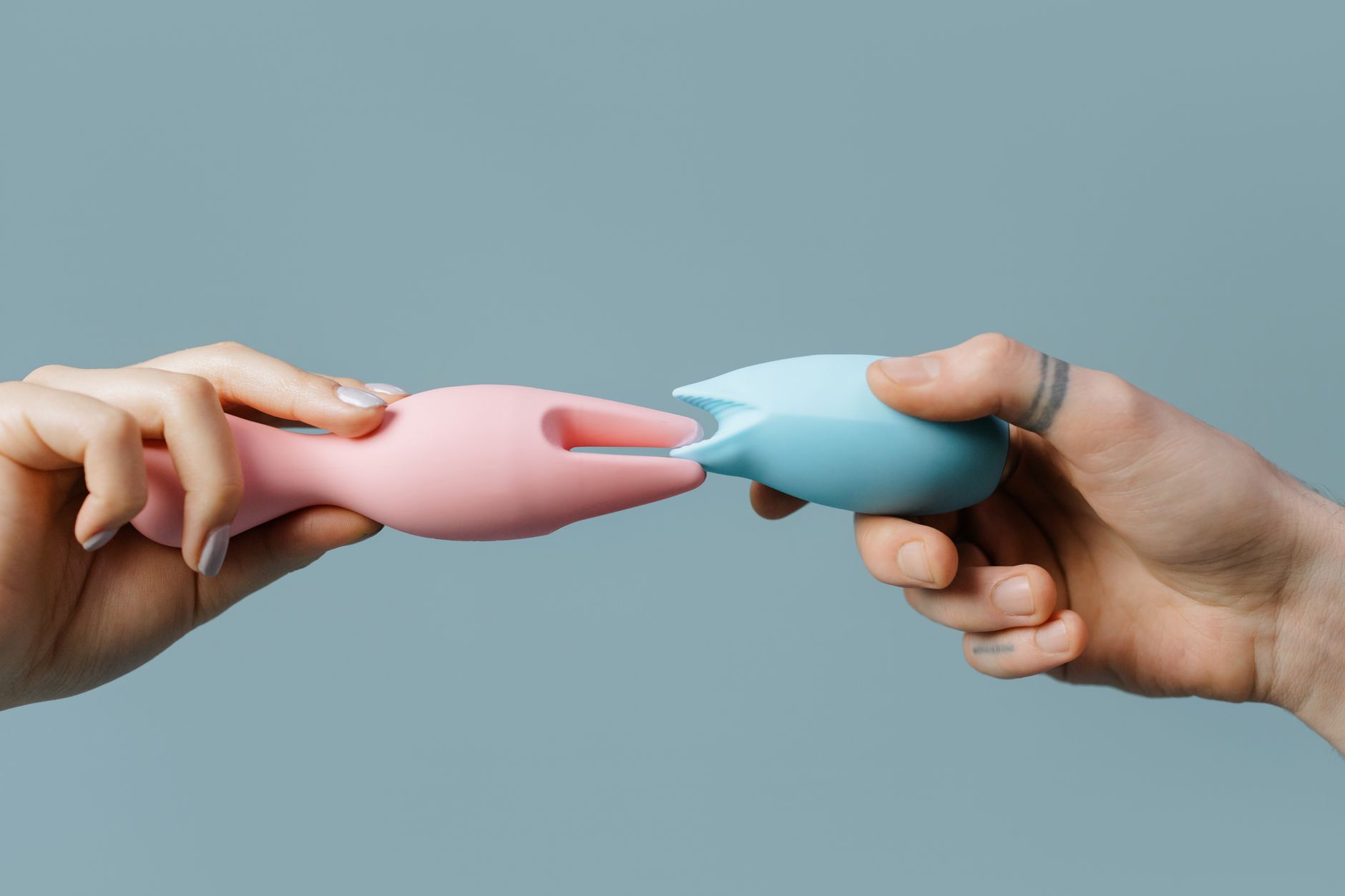
The lag between wanting to reconnect and actually feeling it
You've done the work. The fights are resolved, the distance is closing, you're sleeping in the same bed again. Your partner is present, attentive, trying. And yet when they touch you, it feels like your body is operating on a delay. Your mind wants this. Your nervous system doesn't believe it yet.
This is not laziness. It's not a sign the relationship is still broken. It's neurobiology catching up to emotional progress.
Why sensation lags so far behind desire
When a couple has been emotionally distant for months or years, your body enters a protective state. Think of it as a security system. Even after the fight ends and reconciliation begins, your nervous system doesn't flip back to "open" mode on command. Trust requires repetition. Sensation requires safety.
Your skin, your nerves, your arousal response all operate under the brain's assessment of threat. During emotional disconnection, that threat level stays high. Physical touch becomes transactional or triggering, and your body literally downregulates sensation to protect you from disappointment.
This is called nervous system dysregulation, and it's common in couples working through distance or betrayal. The sexual shutdown isn't spite. It's survival.
The good news: it's reversible. But not overnight.
How the body recalibrates trust
Sensation returns in layers, not all at once. Here's what actually happens:
First, your brain needs consistent evidence that safety is real. This takes weeks of small moments: your partner following through on promises, showing up during stress, respecting your boundaries without resentment. Each of these moments sends a message to your nervous system: "False alarm. We can relax."
Second, your body needs permission to feel pleasure without guilt or fear. Many people rebuilding intimacy carry a hidden voice that says, "If I enjoy this too much, I'm letting them off the hook for the hurt." Pleasure feels like betrayal of your own pain.
Third, you need sensation to practice on. This is where clitoral vibrators become genuinely useful. They're not about intensity. They're about self-directed, low-stakes pleasure that lets your body relearn what feeling good is supposed to feel like.
Why lemon clitoral vibrators help this process
Suction-based vibrators like the lemon models work differently than traditional vibrators. Instead of the broad, sometimes overwhelming buzz of a wand, they use rhythmic suction to stimulate the clitoris. For someone whose nervous system is still healing, this feels safer because it's more targeted and less intense.
Here's the practical side: when you're rebuilding sensation, gentle pressure over extended time actually rewires your nerve sensitivity better than strong vibration does. The lemon's suction pattern mimics something your body recognizes as natural, not foreign. There's less shock value, more invitation.
You're not using the lemon to achieve something. You're using it to practice feeling.
How to start using lemon vibrators during emotional reconnection
Alone first, always. Don't introduce the lemon into partnered sex yet. Your nervous system needs to build new neural pathways without an audience. Spend two to four weeks using it solo, focusing only on what feels good, not on what you "should" feel.
Start on the lowest setting. Pattern 1 or 2 on the lemon. The goal is sensation exploration, not orgasm. Set a timer for 20 minutes and simply notice what happens. Some sessions will feel like nothing. That's information, not failure. Your body is learning it's safe to respond.
Time it when you feel relatively settled. Don't use the lemon when you're stressed, angry, or drained from a relationship conversation. Use it when you've had a decent day, maybe after a shower, when your nervous system is closer to baseline.
Track what changes. After a few weeks, you'll notice shifts. Maybe sensation feels less numb in certain areas. Maybe your arousal builds faster. Maybe you feel pleasure without the guilt sneaking in. Document these. They're proof your body is recalibrating.
How to introduce the lemon to partnered reconnection
Once you've spent solo time rebuilding sensation, you can invite your partner in. But not as a fix or a performance. Frame it differently.
"I've been using this to help my body feel safe again. I'd like to explore it together sometimes, but only when it feels right for both of us."
That distinction matters. You're not saying, "Here's the solution to our sex life." You're saying, "This is part of my healing, and I want you to be part of it."
When you do use the lemon together, keep the pressure low. Have your partner simply be present in the room, not performing or waiting for a specific outcome. Sometimes they can touch you elsewhere while you use the lemon. Sometimes you use it while talking, creating emotional closeness alongside physical sensation.
The lemon becomes a bridge between you and your own nervous system, with your partner as a calm witness.
The emotional work still matters most
Here's what I tell couples in my practice: the vibrator is a tool, not a solution. If you're using the lemon to avoid addressing deeper disconnection, you'll hit a ceiling fast. Your body will sense the inauthenticity and shut down again.
But if you're using it as part of genuine reconnection work, it accelerates the nervous system's ability to believe that touch is safe again.
The couples I've worked with who rebuild the strongest intimacy are the ones who do both: the emotional repair work (therapy, real conversations, consistency) AND the somatic work (using tools like lemon clitoral vibrators to rebuild body trust, solo exploration, slowly reintroducing touch).
One without the other doesn't work. Together, they're powerful.
When sensation stays slow (and that's okay)
Some people's bodies take longer to recalibrate. Three months in, you might still feel relatively numb. That doesn't mean the relationship work is failing. It means your nervous system is being appropriately cautious.
Keep going. The fact that you're showing up consistently, using tools to help yourself feel, and inviting your partner into the process? That's already the hard part. Sensation follows trust, and trust follows time and repetition.
Your body will catch up. It just won't be on anyone's timeline but its own.
FAQ: Rebuilding sensation after emotional distance
How long does it usually take for sexual sensation to return after emotional disconnection?
There's no universal timeline, but most couples report noticeable shifts in sensation within 4 to 8 weeks of consistent reconnection work. Some people feel changes within days. Others take several months. The key variable is nervous system safety. If your partner continues showing up and you keep practicing self-directed pleasure, sensation tends to return gradually rather than suddenly.
Is it normal to feel guilty about enjoying pleasure when you're still processing hurt?
Completely normal. Pleasure during reconciliation can feel like you're rewarding the behavior you're upset about, or abandoning your own pain. That guilt is actually a sign your nervous system is still in protective mode. As you rebuild emotional safety, that guilt usually softens. Using the lemon solo helps here because there's no audience to justify the pleasure to.
Should I tell my partner I'm using a lemon vibrator, or is that private?
That depends on your relationship and comfort level. Some couples benefit from transparency. Others need solo rebuilding time before sharing. There's no wrong answer. If secrecy creates additional stress, transparency might help your nervous system relax. If sharing feels premature, solo practice is fine too. Just notice if secrecy itself becomes a way of maintaining distance.
Can using a lemon vibrator help if the emotional disconnection is still ongoing?
Not effectively. A vibrator can't outrun ongoing hurt. If you're using the lemon while your partner is still being emotionally unavailable or hurtful, your nervous system will keep contradicting the pleasure signal. The tool works best when you're in active reconciliation, not while conflict is still happening. If the relationship isn't moving toward repair, that might be worth examining separately.
What if sensation starts to return but then shuts down again after a fight?
That's actually normal. One argument doesn't erase weeks of progress, but it does remind your nervous system that threat still exists. After the conflict is resolved, keep using the lemon. Your body will recalibrate again faster the second time because it now knows the cycle can repair itself. Setbacks are part of the process, not proof it's failing.
How do I know if it's emotional disconnection causing sensation loss versus a physical issue?
If sensation loss started during or right after a period of emotional distance, it's almost certainly nervous system related. If it happened gradually over years without obvious relationship triggers, or if it appeared suddenly after a medical event, there might be a physical component too. It's worth talking to your doctor if the timeline is unclear. But if the pattern is emotional disconnection followed by numbness, clitoral vibrators and nervous system work will likely help.
Reconnecting after emotional distance is some of the hardest, most rewarding work a couple can do. Your body isn't broken. It's being smart. And when you give it the time, safety, and tools it needs, sensation comes home. You deserve that return.