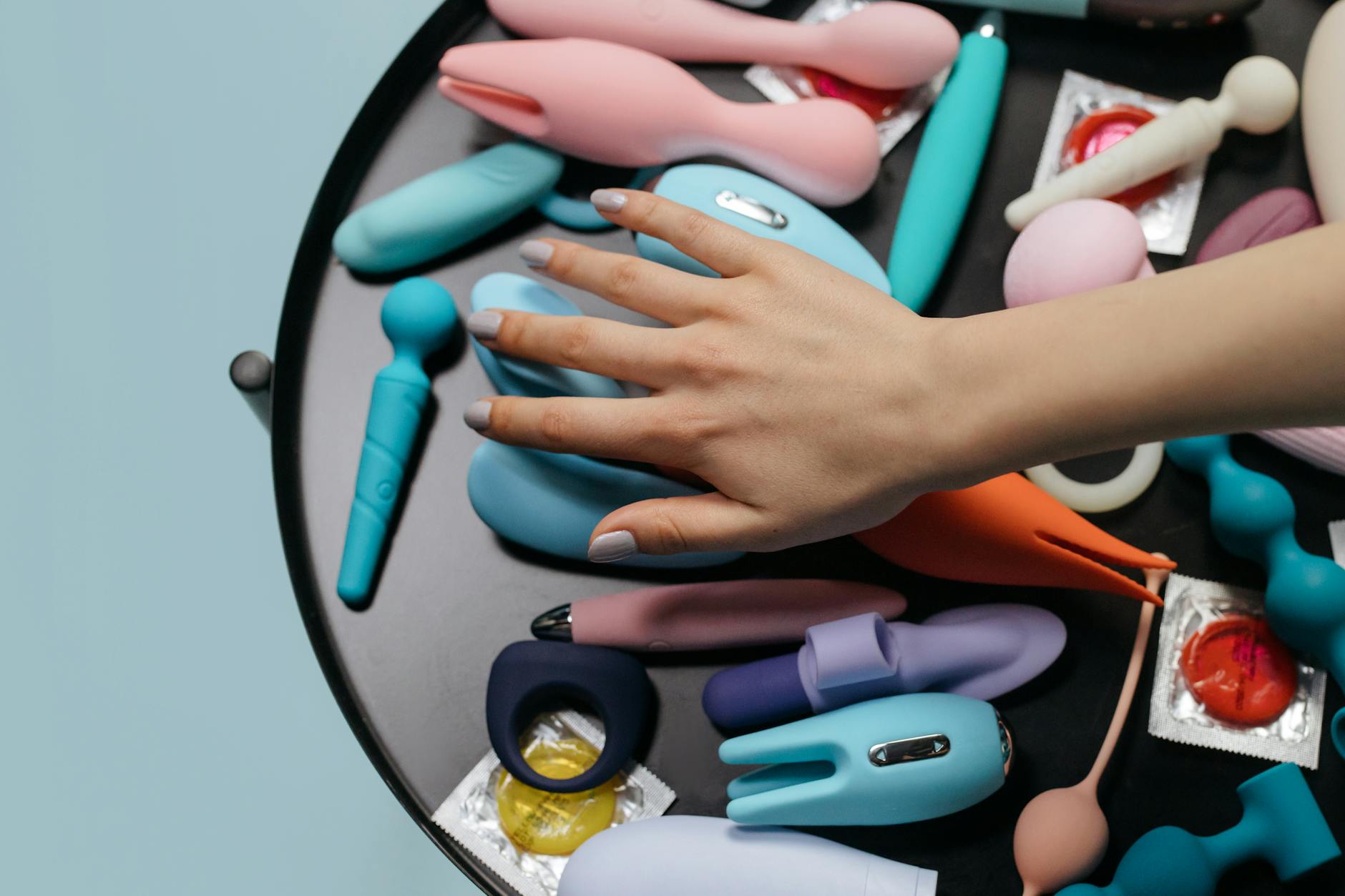
Let's talk about the transition nobody explains well
You've spent years, maybe decades, knowing exactly how to touch yourself. Your hands have rhythm, pressure, and feedback. They're responsive. Then you pick up a vibrator. And suddenly nothing feels quite right. Either it's too much, or it's weirdly not enough, or the sensation is so different that your body doesn't quite know how to read the signal.
That's not a problem. That's a completely normal gap between two very different tools.
Why your hands and a vibrator aren't the same thing
Hands do something vibrators don't. They move. They build pressure gradually. They respond to what feels good in real time. A vibrator, by contrast, sends consistent micro-movements in one direction at high speed. The sensation is neurologically different. Your clitoris has about 8,000 nerve endings, and they're tuned to pick up a range of stimulation types. Your hands have been teaching those nerves what to expect for years. A vibrator speaks a completely different language.
Here's what changes:
With hands, you're building arousal in layers. Press, release, vary the rhythm, adjust pressure. Hands create anticipation because they're unpredictable. A vibrator at a fixed setting does the opposite. It sends a steady signal. That's not worse. It's just a different contract your nervous system has to accept.
Second, your hands give you feedback through touch. You feel what you're doing. With a vibrator between your hand and your body, that feedback is muted. You lose some of the proprioceptive sense of exactly where and how you're being touched.
Why this matters for lemon vibrators specifically
A lemon vibrator uses air-suction technology instead of traditional vibration. That means instead of a motor creating shaking, the device creates gentle suction and release patterns. This is actually closer to how your mouth and hands work together during partnered sex. The sensation is more like sustained pressure that pulses, rather than the rapid vibration your fingers can't replicate.
This is good news. It means switching to a lemon clitoral vibrator from manual stimulation might actually feel more familiar than switching to a traditional vibrator would. The rhythm of suction mimics the rhythm of touch in ways that pure vibration doesn't.
But familiar and identical are not the same. You're still learning a new language.
The four-stage approach to making the switch
Don't force immediate results. Give yourself permission to spend time on each stage.
Stage one: get acquainted with no pressure. Start with the lemon vibrator off your body entirely. Hold it in your hand. Feel the weight. Try it at the lowest setting somewhere neutral, like your inner wrist or forearm. You're not trying to feel pleasure yet. You're just getting your nervous system used to the sensation without the expectation of orgasm attached. Spend 2-3 days on this if needed. There's no prize for moving fast.
Stage two: introduce it to the general area. Still clothed, or with the device outside your body, try the sensation against your inner thighs or your pubic mound. Vary the intensity setting. Notice what feels gentle versus what feels too intense. Most people who've relied on manual stimulation are used to fairly firm pressure. A lemon vibrator at setting 1 or 2 might feel almost nothing at first. That's not a sign it won't work. It's a sign your nervous system is adjusting.
Stage three: combine hands and device. Here's where the magic usually starts. Use your hand to touch yourself in the ways you know work. Then, without changing your motion, add the vibrator at a low setting to one specific area. The combination of familiar pressure plus new sensation often clicks faster than the device alone. Let your hand keep doing what it knows. The vibrator is the guest.
Stage four: use the device as the primary stimulator. Only when you're genuinely aroused and ready should you move to letting the lemon vibrator do the primary work. By this point, your nervous system has already learned the sensation in a lower-stakes way. Integration is easier.
The intensity question everyone gets wrong
You'll hear people say lemon vibrators are "perfect for beginners" or "very intense." Both things are true. The confusion is that beginners and people coming from decades of manual experience need different things.
If you've been using your hands alone, your clitoris is probably somewhat accustomed to firm, varied pressure. A setting 3 or 4 on most air-suction devices is often the right starting point for you, not setting 1. Setting 1 might feel like absolutely nothing. That's why people think the device isn't working, when really the intensity is just too low.
Start at setting 2. Wait 30 seconds to let that register neurologically. If you feel something, stay there. If you feel nothing, move to setting 3. Most people coming from manual stimulation find their sweet spot between 3 and 5 on a 10-setting device.
But here's the thing. Even when you find your intensity, you're not looking for the same sensation you got from your hands. You're looking for a sensation that works with your body. The suction-and-release rhythm of a lemon vibrator (particularly models like the Lem) creates a very different build toward orgasm than your hands do. It might feel sharper, or more concentrated, or more sustained. That's not wrong. It's just a new pathway.
Timing and arousal states matter more than technique
One of the biggest mistakes I see from people switching from manual to vibrator use is trying to use the device when they're not actually aroused yet. Your hands are good at building arousal from a lower state because they're responsive and variable. A vibrator works best when you're already somewhat turned on.
This doesn't mean you need an orgasm-level arousal state. But you should feel some blood flow, some sense of wanting touch, some readiness. If you're using a lemon vibrator on a body that isn't aroused, it will feel like a buzzing stick.
If you want to use a lemon vibrator as your primary tool for building arousal, spend 10-15 minutes with your hands first. Read something that arouses you. Think about something. Move your body. Then introduce the device. That order matters.
What integration actually looks like
After about two weeks of consistent use (even just 10-15 minutes a few times a week), most people stop thinking of a lemon vibrator as separate from their normal pleasure routine. It stops feeling like a tool you're trying and starts feeling like an option you choose.
Some days you'll want your hands. Some days you'll want the device. Some days you'll want both. That's not failing at the switch. That's successful integration. You've gone from "my hands are the only way" to "I have options depending on what I need today."
When switching from manual stimulation, one pattern I notice: orgasms with a vibrator often feel different. They might be sharper, more localized, faster to build, or more intense. Or they might be gentler and longer. That variation is normal. Your body is wired for sensation, not for consistency. Different tools deliver different experiences. The lemon clitoral vibrator isn't trying to replicate your hand. It's offering something adjacent and new.
Patience is the real technique here
There's a version of this transition where you pick up a lemon vibrator, try it twice, decide it's not for you, and give up. That's completely valid if you just don't like vibrators. But if you're interested in exploring clitoral vibrators, know that the adjustment period is real.
Give yourself at least a month of casual, pressure-free exploration. Don't use it when you're expecting a specific outcome. Use it when you're curious. When it clicks, it'll click. And when it does, you'll have expanded your understanding of your own pleasure in ways that solo hands alone probably couldn't reach.
The goal isn't to replace your hands. It's to add a tool that does something different. That's how you move from "manual stimulation is the only way I know" to "I have options, and I understand my body better because of them."
Frequently asked questions
How long does it actually take to adjust from manual to vibrator use?
Most people notice a difference within 2-3 weeks of casual, low-pressure exploration. Full integration where it feels totally natural usually takes 4-6 weeks. This varies wildly depending on how much you use it, your arousal level when you start, and your comfort with change in general. Patience beats rushing. There's no timeline you should be hitting.
Is it normal for a vibrator to feel too intense after years of just using hands?
Completely normal. Your clitoris has been receiving consistent, human-level pressure and rhythm. A vibrator at high settings can feel shocking or overwhelming at first. That's why stage one and two matter so much. Lower intensity, longer adjustment period, and combination techniques (hands plus device) help way more than jumping to high settings.
Can you stop liking manual stimulation once you start using vibrators?
No. Your hands will always work. Some people find that after using vibrators regularly, they prefer them. Others maintain a preference for manual touch. Some rotate between both depending on time, energy, and mood. This isn't dependence. It's just having options. Your body doesn't forget how to respond to hands.
What if my partner gets insecure about me using a lemon vibrator?
This is a relationship conversation, not a vibrator problem. A vibrator isn't replacing your partner. It's a tool for your own pleasure, which benefits both of you by expanding what you understand about what works for your body. If your partner's insecurity is getting in the way, that might be worth exploring with a couples counselor or therapist who specializes in intimacy. You deserve to explore your pleasure without guilt.
Should I be using lube when switching from manual to a lemon vibrator?
Yes, almost always. Water-based lube especially. Even if you produce natural lubrication easily, a bit of extra slip makes the transition smoother because it reduces friction and changes the sensation in ways that often feel less jarring when you're adjusting to vibration. It's not because anything's wrong with you. It's just a practical aid during the learning phase.
Is there a "wrong" way to use a lemon vibrator coming from manual experience?
The main trap is expecting the same sensation and outcome as your hands deliver. That comparison will frustrate you. Instead, try approaching it as discovering a new path to pleasure rather than replacing a familiar one. Different isn't wrong. It's different. Once you stop measuring it against your hands, it becomes easier to just experience what the lemon vibrator actually offers.