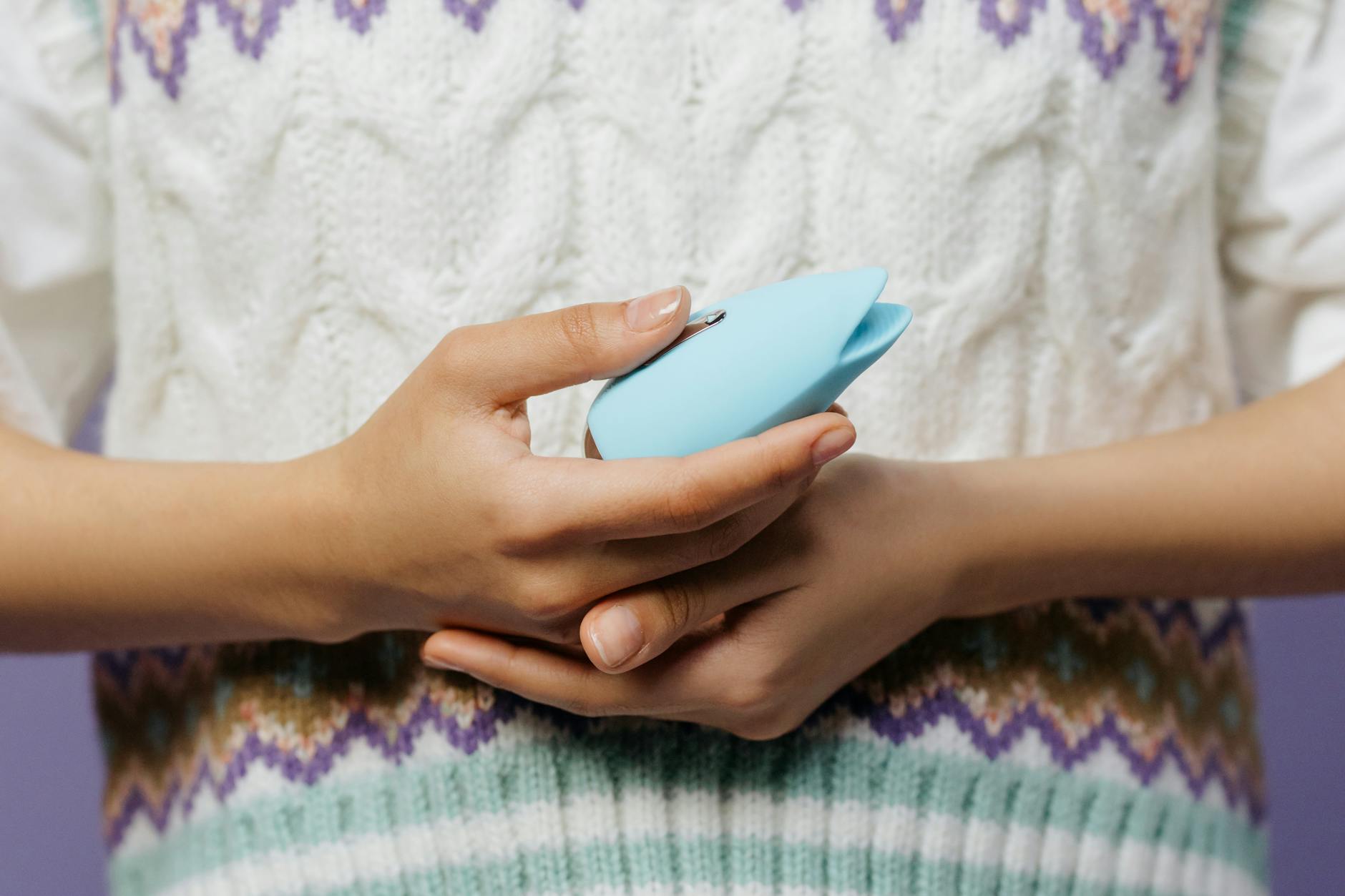
Let's talk about what happens when your relationship changes
Breakups, divorces, affairs, separations, reconciliations, major conflicts, or even just a shift in how your partner shows up. Any of these can disconnect you from your own pleasure. Not because you're broken. Because your nervous system learned to contract when it should have been opening up.
I've worked with dozens of people who realized, months into a transition, that they'd stopped feeling sexual sensation altogether. It wasn't laziness or loss of desire. It was protection. Your body was guarding itself.
How relationship transitions numb pleasure
When you're in emotional conflict or grieving a relationship shift, your nervous system goes into a protective state. Blood flow redirects from your extremities and your pelvic floor to your core. Arousal requires relaxation; protection requires tension. These two things can't happen simultaneously.
Second, there's the attention problem. Pleasure requires presence. When you're hypervigilant about your partner's mood, or replaying conversations, or negotiating whether the relationship will survive, your brain has no bandwidth for sensation.
Third, pleasure often gets tangled with the relationship itself. If sex was a point of conflict, or if you made love during happy times you're now grieving, your body might have learned to avoid arousal altogether. That's not a failing. That's your nervous system doing exactly what it evolved to do: protect you from what hurt.
The solo reset matters
Here's what I tell people: if you want to rebuild pleasure after a major relationship transition, you need to know what your body feels like when you're completely alone and completely safe. Not performing for someone, not negotiating, not managing anyone else's experience. Just you.
This is where lemon vibrators come in. They're tools for that solo reset. Air-suction clitoral vibrators like the Lem work differently than traditional vibrators because they engage your nervous system through a gentler pathway. They create a rhythmic, consistent sensation that doesn't require the kind of mental focus that traditional vibration does. Your brain can actually relax.
Step one: create the actual conditions for safety
Your nervous system doesn't know the difference between imagined threat and real threat. So if you're exploring pleasure while stressed about your relationship, your body will still contract.
Before you reach for a lemon clitoral vibrator, handle the obvious stuff. Lock the door. Put your phone on silent. Decide in advance how much time you have so your brain stops checking the clock. Even 15 minutes of actual protected time matters more than an hour of interrupted half-attention.
Second, lower the stakes. You're not trying to have an orgasm. You're not trying to "fix" anything. You're exploring what sensation feels like when nothing depends on it. That shift in intention alone changes what your nervous system allows.
Step two: start with sensation, not pressure
After relationship upheaval, people often have one of two responses. Either they avoid their body entirely, or they go hard trying to reclaim pleasure as a statement of independence. Both backfire.
Start with the lowest settings on your lemon vibrator. I usually recommend patterns 1 through 3 on the Lem. Use it to explore your body without expectation. Run it over your inner thighs, your outer labia, the sides of your clitoral area. This isn't foreplay. It's reacquaintance.
Let your body tell you what feels good. Some days that's gentle sensation for five minutes, then you stop. Some days your arousal builds. Both are fine. The goal is to prove to your nervous system that sensation is safe when it's under your control.
Step three: notice what's actually true
As you start exploring with a lemon sucker or other clitoral vibrator, pay attention to the stories your brain tells you. Many people discover thoughts like: "I shouldn't be doing this alone," or "My ex would hate this," or "I'm supposed to feel ashamed." These aren't facts. They're echoes of the environment you just left.
You get to notice them and keep going. You don't have to believe them or fix them or work through them right now. You're just gathering information about what your nervous system learned.
How lemon vibrators specifically help here
Clitoral vibrators designed with air-suction technology, like those made by Helo Nancy's Lemons, work with your body's natural response pattern rather than against it. They don't require you to build arousal gradually through increasing friction. They create a self-contained sensation that your nervous system recognizes as distinct from partnered sex.
This distinction matters. If sex with a partner was painful or conflicted, your nervous system might avoid anything that "feels sexual." But sensation that feels different, that's controlled entirely by you, at your own pace, can rewire that response. You're not overwriting the old experience. You're creating a new neural pathway.
Many people also find that after relationship transitions, they need longer to warm up, or they need less intensity than they expected, or they discover they like sensation in places they didn't before. A lemon vibrator lets you explore all of that without anyone else's expectations in the room.
What to actually expect
Don't expect instant arousal or orgasms that feel like they used to. Your pleasure might feel muted at first. It might come in waves. You might discover that what turns you on has actually changed, which is fine and common after major transitions.
Some people report that pleasure returns surprisingly fast once they start exploring solo. Others find it takes months of gentle, consistent practice before sensation comes back fully. Both timelines are normal.
What usually shifts first is presence. You'll notice one session where you're actually there, thinking about what you're feeling instead of replaying relationship drama. That's the breakthrough moment. Everything after that gets easier.
When to bring a partner back in
If you're rebuilding pleasure after a relationship transition and hoping to eventually have partnered sex again, the solo work comes first. Not because you owe anyone sex, but because you need to know what your body actually wants when it's just you.
Once you've had consistent sessions where you feel present and aroused without anyone else, you can start thinking about what partnerships might look like. You'll know what patterns feel good, what intensity works, what kinds of touch your nervous system has actually learned to trust again. That knowledge transforms partnered sex from something you're trying to make work into something you're actually choosing.
If the relationship that caused the disconnection is ongoing, this work is even more important. You need proof that your body can feel pleasure independently, outside of the relationship's emotional weather.
The permission you might not know you need
After major relationship transitions, people sometimes feel guilty for exploring pleasure solo. Like they're betraying their partner, or abandoning hope for the relationship, or being selfish. That's the relationship's voice, not yours.
Your nervous system healing is not betrayal. Knowing what your body needs is not rejection. Taking time to reconnect with yourself before you try to reconnect with anyone else is actually the most generous thing you can do for a partnership, if that's what you're choosing.
Helo Nancy's Lemons makes lemon clitoral vibrators because pleasure matters. Not eventually. Not once you've fixed everything else. Now. Your body deserves to feel good while you're healing from whatever shifted your world. That's not frivolous. That's resilience.
FAQ: Rebuilding Pleasure After Relationship Transitions
How long does it usually take to feel pleasure again after a relationship breakup?
There's no universal timeline, but most people notice significant shifts within 2-4 weeks of consistent solo exploration. That might mean feeling present for a few minutes, or noticing arousal building where it was numb before. Major reconnections sometimes take 2-3 months of regular practice. The key is consistency, not intensity. Five minutes of genuine presence daily beats an hour of distracted effort.
Can lemon vibrators actually help if I'm still in the relationship that caused the disconnection?
Absolutely. In fact, solo exploration becomes even more important when you're navigating ongoing relational stress. It gives your nervous system proof that pleasure exists outside the conflict. It also gives you clarity about what you actually want, which changes how you show up in the relationship itself. Many people find that reconnecting with solo pleasure actually shifts the dynamic between partners.
What if I feel guilty or ashamed while using a lemon vibrator after a relationship change?
That guilt is usually a learned response from the relationship itself, not something true about you. Notice it without judgment. Your nervous system learned that pleasure needed to come with conditions, or shame, or caution. You're teaching it something new. The guilt usually fades as you build more positive experiences. If it intensifies over weeks, talking with a therapist might help you untangle what's underneath.
Is it normal to have orgasms that feel different after relationship transitions?
Completely normal. Orgasms after major transitions often feel less intense at first, or more localized, or they might involve different breathing or muscle engagement. Your nervous system is healing. It takes time for pleasure to feel expansive again. Some people also discover they like sensation they never explored before. Those changes aren't permanent. As your nervous system settles, your pleasure response often expands again.
If I'm in a couple, should I tell my partner I'm using a lemon vibrator for this healing?
That's entirely your choice. Some couples find it helpful to be transparent about solo exploration as a healing tool. Others prefer privacy. What matters is whether the secrecy feels protective or shameful. If you're hiding because you feel ashamed, that might be worth exploring. If you're choosing privacy because you need solo space, that's healthy. The key is knowing the difference.
How do I know if my pleasure is actually coming back, or if I'm just going through the motions?
Presence is the signal. You'll notice a moment where you're thinking about what you're feeling instead of what happened in your relationship. Where your attention is in your body instead of in your head. That might last five seconds at first. That's the signal. Everything builds from there.