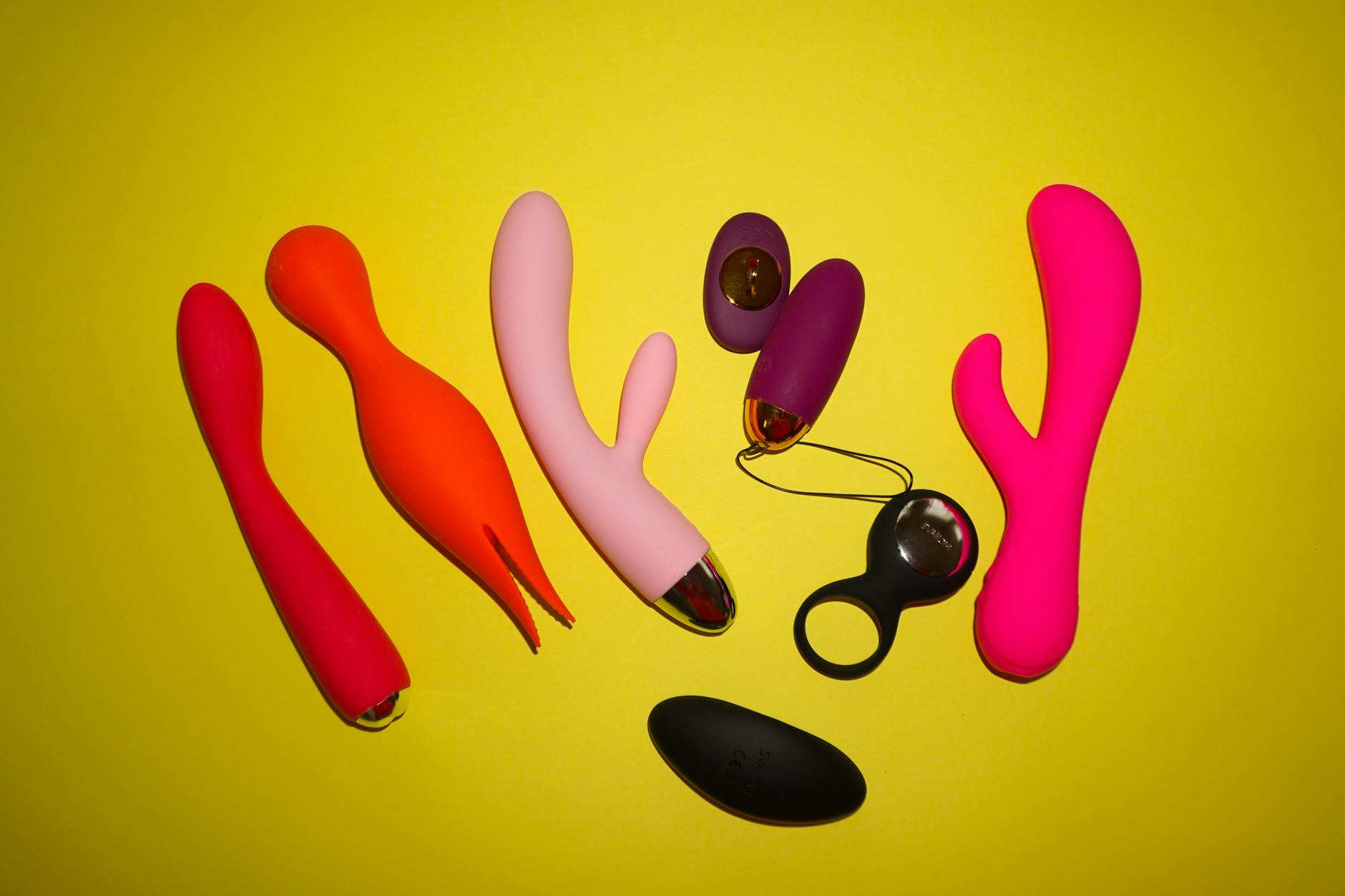
Let's be real about the anxiety
You've got a lemon vibrator. You like it. Now there's someone new in your life, and you're wondering: do I mention it? Do I just pull it out? Do I pretend I don't own one and lose part of myself in the process? The fear isn't really about the toy. It's about rejection, judgment, or accidentally signaling that what you're already doing together isn't enough. None of that is actually true, but the worry feels real because intimacy makes us vulnerable.
Here's what I've learned after years of working with couples: the partners who navigate this best aren't the ones who wing it. They're the ones who separate the logistics from the emotion, then handle each one clearly.
The pre-conversation conversation
This doesn't mean a big sit-down. It means noticing the moment and creating one.
The ideal window is when you're both relaxed but awake. Not mid-argument, not 11 p.m. when you're both tired, not during sex (that's not the time to introduce new variables). Think: Sunday afternoon on the couch, or after dinner when you're both calm and present.
Here's the shape of what works: you're honest about why it matters to you, you're matter-of-fact about what it is, and you're genuinely curious about how they feel. Not curious in a leading way ("You're cool with toys, right?"). Curious like you actually want to know.
"I use a vibrator and I really like it. I've been thinking about whether I want to use it when we're together, and I wanted to check in with you first. How do you feel about that?" That's it. Clean. No apology embedded in the sentence.
What you're listening for in their response: are they curious, nervous, excited, or defensive? That tells you what to address next. If they seem nervous, that's not rejection. That's often just "I don't know what this means about me." You can help with that.
What they might worry about (and what to say)
"Does that mean I'm not enough?" No. It means you're a clitoral vibrator user, the same way someone might be a running enthusiast or a tea person. Neither replaces their partner. The stimulation is different, the context is different, but the person you're with matters.
"Will you compare me to it?" Honestly, lemon clitoral vibrators like the Lem deliver suction and patterns no body can match. That's not better. It's different. You use both for different reasons. I always say: you don't compare a massage chair to a person's hands. One is efficient, one is intimate. Both are real.
"Does this mean you want something I can't do?" Sometimes yes. And that's okay. You might want simultaneous G-spot and clitoral stimulation, or deeper sensation, or hands free play. A vibrator isn't a failure on your partner's part. It's adding to the menu, not replacing the meal.
The timing question
When do you actually introduce it during sex? That depends on your dynamic and comfort.
Option one: use it together from the start. "I'd like to use this, would you be interested in being part of that?" This works when your partner is genuinely curious and comfortable. You're not hiding it, not making it weird. It's just there. You might guide their hand to it, or use it yourself while they touch you elsewhere. The key is that it's collaborative, not solo.
Option two: use it solo while they're involved. This means you're in control of it, they're stimulating you in other ways (penetration, kissing, hand stimulation), and the vibrator is supplementing. This often feels less like something's "happening to them" and more like everyone's just working toward the same goal.
Option three: use it solo while they watch. This requires more confidence from both of you, but it's profoundly intimate when it works. You're showing them what you like. You're trusting them to handle seeing your full pleasure without needing to perform for them. This is actually easier with new partners sometimes because there's no history of shame to untangle.
The actual first time
Start slow. Not just with the vibrator, but with everything.
Begin at lower settings. If you're using a lemon clitoral vibrator, start at pattern 1 or 2, not the high-intensity settings. You're not trying to reach orgasm immediately. You're showing your partner what this feels like, what your body does, where you like touch. Build it gradually. Let them see and feel your arousal curve.
Keep talking. Not constant chatter, but real commentary. "That feels amazing," or "I like when you touch me here while I do this," or "Let's see what happens if we combine these." This is partly for them (it confirms they're doing it right) and partly for you (it keeps you from spiraling into your own head about whether this is weird).
Watch their response. Most partners become fascinated once they see you enjoying yourself. There's something magnetic about someone's genuine pleasure. If your partner is leaning in, touching you more, making eye contact, those are signals they're engaged and into it. If they're pulling back, that's data too. You can pause and check in.
After it happens
Don't let it become weird in the recap.
Some people need to debrief immediately. "That was hot. I liked when you..." That serves everyone. It normalizes what just happened, it gives positive feedback, and it makes it clear this wasn't a one-time experiment. You're not embarrassed. You're not hiding it away.
Other couples need to just move on naturally. Cuddle, talk about something else, let it be normal. That's fine too. The worst thing you can do is create space for them to spiralize. Treat it like it was exactly as normal as everything else you do.
Over the next few days or weeks, you'll notice patterns. Maybe your partner gets more confident, starts suggesting using it, finds their own role in the experience. Maybe they ask questions about how it works. Maybe they suggest bringing something of their own. These are all good signs that it's integrated into your dynamic rather than being a novelty or a threat.
When your partner is the reluctant one
Sometimes the conversation doesn't go the way you hoped. Your partner's not interested, or they're uncomfortable, or they say yes but seem strained.
That's real information. And it deserves a follow-up conversation, not during sex, where you're actually curious about what's underneath the resistance. Sometimes it's something fixable (they don't like the noise, or they're worried about cleanup, or they want to use it differently). Sometimes it's something bigger that couples therapy can help with. Sometimes it's just a boundary they have, and your job is to respect it while also knowing yourself.
You don't have to choose between a lemon clitoral vibrator and a partner. But you do have to choose between your own pleasure and someone who can't respect it. That's the hard part no one tells you.
Building the ritual
Once you've crossed the threshold, the goal is making it feel like part of your repertoire, not a special event or a shameful secret.
Maybe it becomes part of foreplay. Maybe you use it together on Sunday mornings. Maybe it's something you ask for when you need to get there quickly and don't have a lot of time. Whatever pattern emerges, let it be natural. The less it feels forced or scheduled, the more it becomes part of who you are together.
FAQs
What if my new partner thinks toys are for people who don't have partners?
That's a common belief, usually rooted in insecurity or lack of exposure. You can gently reframe it: toys enhance partnered sex for almost everyone. It's not a reflection on them. A vibrator is a tool, not a referendum on your relationship.
Should I tell them about my vibrator before or after we sleep together?
Before is usually smoother. You're setting expectations in a calm moment rather than creating a surprise mid-intimacy. Plus, if they have a strong reaction, you know that before you're vulnerable. It's better information earlier.
What if they want to use it but I feel self-conscious with them watching?
Totally normal. You can start with less eye contact, more focus on sensation. Use it while you're facing away, or with the lights dimmed. Confidence grows. As you get more comfortable, the visibility usually becomes less scary and sometimes becomes part of what's hot about it.
Is it weird to use a lemon vibrator during partnered sex if we haven't talked about it first?
Yes. Talk first. The surprise factor isn't worth the risk of them feeling blindsided or disrespected. One 60-second conversation prevents a lot of downstream awkwardness.
What if using a vibrator with a partner feels different than using it alone?
It will feel different. There's more mental load (are they okay, am I taking too long, is this weird). Sometimes that makes it harder to come. That's super common. Keep using it with them anyway. The more you practice, the easier it gets to focus on sensation rather than performance anxiety.
How do I know if my partner is actually okay with it or just saying yes?
Action over words. If they're genuinely fine with it, they'll touch you more during it, ask questions, engage with your pleasure. If they're just tolerating it, they'll be still or distant. That's your signal to check in: "I want to make sure you're actually into this. What would feel better?" Give them permission to change their mind.
The real point
Introducing a lemon vibrator to a new partner isn't about the toy. It's about knowing you deserve pleasure and trusting someone enough to let them be part of that. The partners who handle it best aren't the smoothest talkers. They're the ones who care more about their own integrity than avoiding awkwardness. That confidence is what makes the conversation, and the intimacy, feel less weird. It just feels like honesty.
If you're ready to have this conversation, you're ready. And if your new partner responds with curiosity instead of judgment, you've just learned something really important about them.