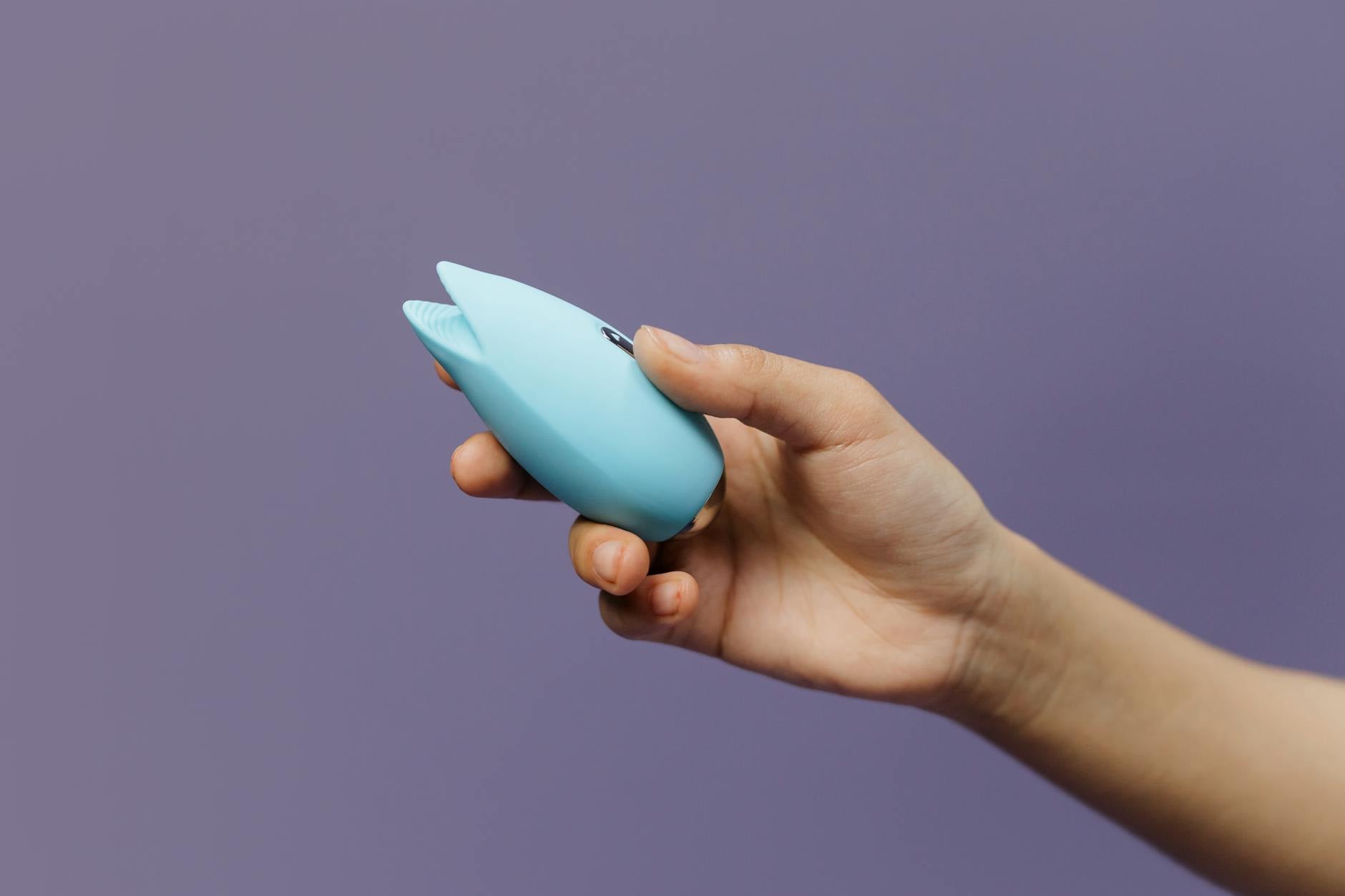
Here's what nobody tells you about arousal in your 40s
At 35, you could think about sex and be wet in 90 seconds. Now at 42, you need 20 minutes of actual touch just to feel a spark. You're not losing desire. Your nervous system is just operating on a different schedule. And that schedule, weirdly, can be better. Let me explain what's actually happening, and why understanding it changes everything.
The shift isn't a glitch. It's physiology. Your body is producing less estrogen, your vaginal tissue is getting naturally drier, and your cardiovascular system needs more time to redirect blood flow toward your genitals. These aren't problems to fix. They're realities to work with. And the right tools, like lemon vibrators, make that adjustment seamless.
The biology of slower arousal
Your 40s bring real neurochemical changes. Estrogen levels drop gradually, which affects blood flow, tissue hydration, and how quickly your nervous system responds to stimulation. This isn't permanent or progressive. It's just different. Here's what shifts:
Vaginal lubrication takes longer. The tissue lining your vagina has fewer blood vessels feeding it, so natural lubrication is slower to arrive. This doesn't mean you're unattracted. It means your body needs foreplay to happen for longer.
Neural responsiveness slows slightly. Your clitoral nerves still fire with the same intensity, but the buildup phase is longer. Instead of reaching arousal in minutes, expect 15 to 25 minutes of consistent stimulation.
Blood pressure and heart rate take longer to climb. Arousal is literally a cardiovascular event. In your 40s, that event unfolds more gradually. This is why rushing doesn't work. Your body isn't ready to skip steps.
The good news: this isn't universal, and it's not inevitable if you stay active, manage stress, and stay sexually engaged. People who have regular sex in their 40s often report faster arousal than those who have longer gaps. Your body responds to what you ask of it.
Why the Lem and other lemon clitoral vibrators matter here
A basic vibrator applies constant vibration. For a body in your 40s, that can feel either too intense too quickly (causing numbness) or too gentle (not enough stimulation to trigger the arousal cascade). The Lem works differently. It uses suction and pulsing patterns that mirror the natural rhythm of your body's arousal rather than overriding it.
Here's the practical advantage: suction stimulates the clitoral complex (the whole structure, not just the external bud) without the friction that can desensitize tissue. This matters when you need longer foreplay. You can sustain stimulation for 20+ minutes without your clitoris feeling raw or numb. That's not true of every lemon sexual toy, which is why quality matters.
When you use a lemon clitoral vibrator like the Lem, you're also outsourcing the physical effort. Partnered foreplay is wonderful but exhausting when it needs to last 20 minutes. A tool lets both of you relax into the process instead of rushing through it.
The warm-up strategy that actually works
Forget the idea that foreplay is a phase before "real" sex. For your body right now, foreplay isn't the opening act. It's the whole show. Here's how to reframe it:
Start low-stakes. Spend the first 5 to 10 minutes on touch that doesn't require arousal to feel good. Massage, kissing, cuddling. You're not trying to get wet. You're turning on the arousal machinery. This removes the pressure of "Is it happening yet."
Introduce the lemon vibrator when you feel the first flutter. Not before. The Lem is most effective when your body has already started responding. Using it too early (before natural lubrication begins) can feel cold or overstimulating. Wait for the signal. Your body knows when it's ready.
Start on the lowest pattern. The Lem has multiple intensity levels. Begin on pattern 1 or 2, even though you know you'll eventually want more. Your arousal curve is gentler in your 40s, which means you need a ramp, not a jump. Build over 15 minutes. Notice what changes in your breathing, your sense of pressure, your emotional state.
Use generous amounts of lube. Water-based lube isn't optional for lemon sexual toys in your 40s. Your natural lubrication is still lower, even when arousal is working well. Lube isn't a sign of anything wrong. It's a sign you're being smart.
Many of my clients find that once they stop fighting the longer timeline and start designing foreplay around it, they discover deeper sensation. Rushing past this phase means missing the build. Living in the build is where intensity actually comes from.
The conversation to have with your partner
If you're partnered, the shift in timing can feel like rejection on both sides if you don't talk about it. Your partner might feel like they're not attractive anymore. You might feel pressured or frustrated. That's relationship dynamics hijacking physiology.
Here's what I tell my clients: have this conversation outside the bedroom, when you're both calm. Say something like: "My body's arousal pattern has shifted. I need about 20 minutes of touching before I feel ready. This isn't about you. It's about how my nervous system works now. I want to explore this together." That's it. You've named the change without making it a problem.
Then agree to protect that time. If quickies are the only sex you're having, your body won't have space to warm up properly. That's not a clitoral issue. That's a scheduling issue. Aim for at least one longer session per week where you both commit to the full timeline.
Introducing a lemon vibrator into partnered sex can feel vulnerable. Frame it clearly: "I want to use this tool to help my body get there faster and feel more sensation. This is for both of us." Most partners find it helps because it removes the pressure to manually stimulate for 20 minutes straight, which gets physically tiring.
What changes when you stop fighting the timeline
Here's the thing people don't expect: when you accept that arousal takes longer in your 40s and actually plan for it, the quality of sensation often deepens. You're not sprinting to the finish line. You're exploring. This usually leads to more reliable, more intense orgasms. Not fewer.
Many of my clients who were frustrated by slower arousal at 40 report their most satisfying sex lives in their mid-40s and beyond once they stopped treating the longer timeline as a problem. They introduced better tools, better communication, and protected time. The result: sex that felt less frantic and more intentional.
Your clitoral nerve endings haven't changed. Your capacity for pleasure hasn't diminished. You've just shifted into a rhythm that lets you actually feel what's happening instead of rushing through it.
When to check in with a doctor
There's a difference between arousal that takes longer (normal) and arousal that doesn't arrive at all (worth investigating). If you're experiencing:
- Persistent dryness that doesn't improve with lube
- Pain during penetration that wasn't there before
- Complete loss of desire (not just slower arousal)
- Clitoral numbness even with stimulation
These warrant a conversation with your GP or a gynecologist trained in menopausal health. They can rule out hormonal changes, medication side effects, or other factors. Many are treatable, especially if caught early. You don't have to just accept these changes without support.
But slower arousal on its own? That's your body's new normal, and it's workable. Tools exist. Knowledge exists. Communication exists. You have options.
FAQ: Common questions about arousal, tools, and your 40s
Does slower arousal mean lower desire?
No. Desire and arousal are different. You might want sex intensely but your body takes longer to physically respond. How to Use Lemon Vibrators When Desire Drops During Major Life Transitions covers situations where actual desire is missing. This post is about the timeline shift. That's a completely different picture.
Should I use the Lem during partnered sex or just solo?
Both. Many couples introduce it during foreplay to speed up the warm-up phase so they can get to partnered penetration feeling fully aroused. Others use it during sex for added sensation. Experiment with what feels good. There's no "right" way.
How long should foreplay actually take now?
Aim for 15 to 25 minutes of consistent stimulation before you move to penetration or other activities. This isn't a minimum. It's a realistic window. Some days you might feel ready in 12 minutes. Other days it might take 30. Your body's arousal isn't a switch. It's a dimmer.
Will this get worse as I age?
Not necessarily. Many people find arousal stabilizes once they've adapted to the new pattern and made space for it. What worsens is the experience of fighting against your own body. What improves is the experience when you work with it instead.
Can I speed up arousal with supplements or hormones?
Talk to your doctor about what might help in your specific situation. Some people benefit from low-dose testosterone therapy. Others find that addressing sleep, stress, or relationship dynamics helps more than anything pharmacological. There's no one answer, but your doctor can help you explore options.
What if my partner can't sustain foreplay for 20 minutes?
That's a boundary conversation, not a body problem. Here's the honest truth: if your partner can't make time for your pleasure, that's worth examining. A tool like the Lem exists partly to solve this. It lets your partner take a break while your body continues getting the stimulation it needs. You're not asking them to do something impossible. You're asking them to make space for your pleasure, which might look different than it used to.
The mindset shift that matters most
Your 40s are not a decline. They're a recalibration. Your body is asking you to slow down, to communicate more clearly, to invest in better tools, and to make pleasure a priority instead of something that happens fast and automatically. These aren't losses. They're upgrades.
When you stop treating slower arousal as a problem and start treating it as information, everything shifts. Your body is telling you what it needs. Listen. Adapt. Invest in tools like the Lem that work with your timeline instead of against it. Get curious about what deeper sensation feels like when you actually have time to experience it.
Your pleasure matters. Your timeline matters. Your needs matter. And your body at 40-something, with the right support and understanding, is more than capable of delivering both.
If you're navigating these shifts and want more personalized guidance, reach out. We can talk through what's happening in your specific situation.