The orgasm gap is real, and you're not broken
About 65% of women report difficulty reaching orgasm during penetrative sex with a partner. Sixty-five percent. That's not a quirk, a sign of low desire, or a reflection on your relationship. It's physiology meeting circumstance, and it's one of the most common sexual friction points couples face.
Here's what's actually happening: your body can absolutely finish. Solo, you probably do it reliably. But with a partner present, the dynamic shifts. Different stimulation pattern, mental load, rhythm mismatch, pressure to perform. Add those together and the easiest path to orgasm becomes a lot harder to find.
Why partnered sex makes finishing harder
Three neurological and physical reasons this happens so often:
The stimulation mismatch. Most partnered sex centers on vaginal penetration, which doesn't directly stimulate the clitoris the way you need it to. Solo, you control speed, pressure, and angle. With a partner, you're working with their rhythm. Studies show that about 75% of people with vulvas need direct clitoral stimulation to orgasm. If penetration alone is what's happening, your body is trying to finish without its primary power source.
The mental load never stops. Even in solid relationships, there's a quiet cognitive burden during sex with a partner: Am I taking too long? Is my partner tired? Should I speed this up? Do I need to fake it to end this gracefully? That background anxiety is a full-time job for your brain, and it makes arousal harder to sustain. Pleasure requires mental presence. Worry kills presence.
The pressure paradox. The more you want to finish, the harder it becomes. Performance anxiety is real, and it's bidirectional. If you've been unable to orgasm for a while, you both might be hyper-aware of it by the time you're intimate. That awareness tightens everything. Your pelvic floor contracts instead of relaxes. Your nervous system shifts into a subtle stress mode. And finishing becomes mechanically harder, not easier.
How lemon vibrators change the equation
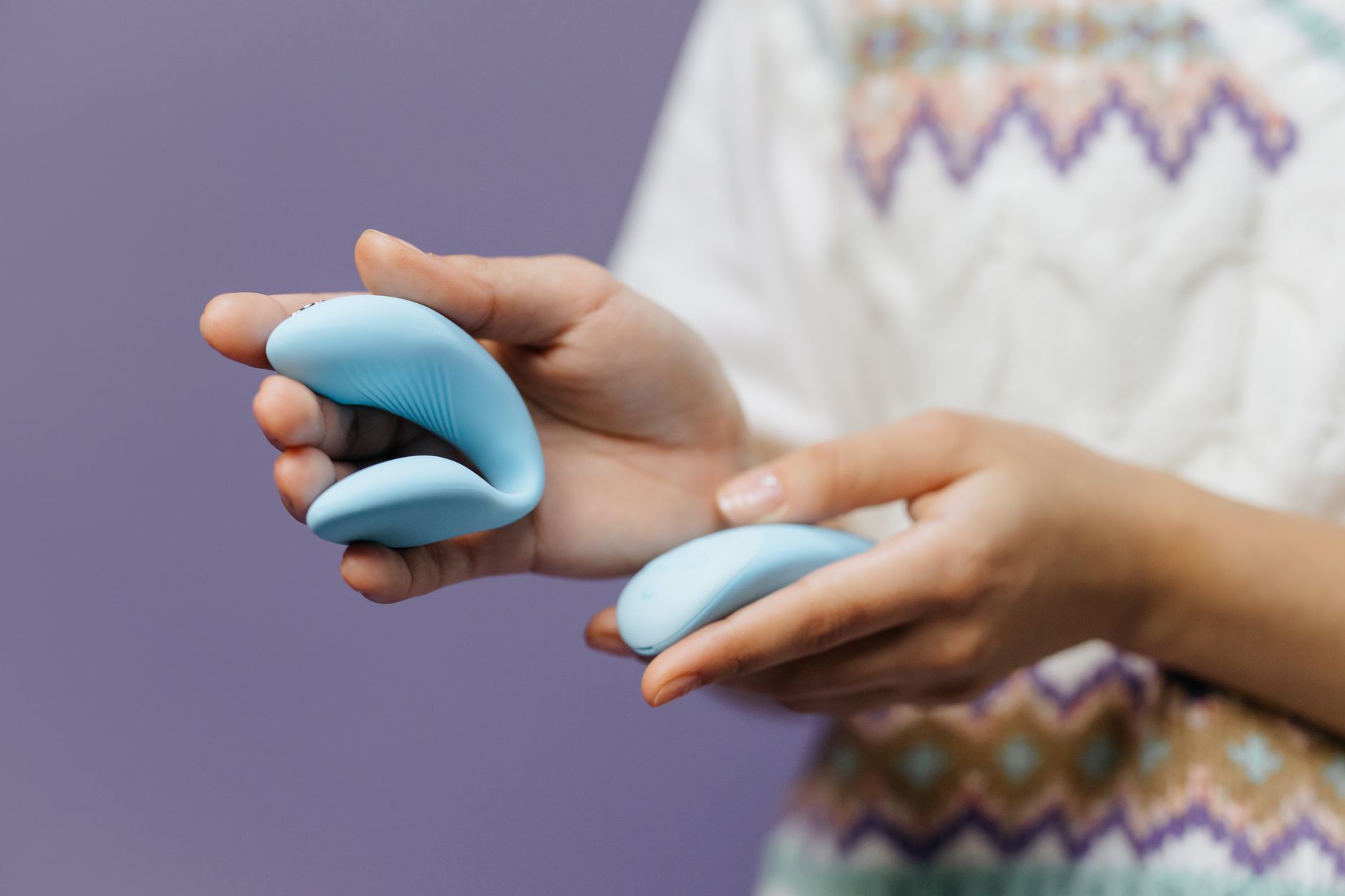
A quality clitoral vibrator like the Lem doesn't replace your partner. It solves the stimulation math. Here's why lemon suction vibrators work so well in partnered contexts:
Direct clitoral access without stopping. The Lem delivers sustained, consistent stimulation to the exact place that needs it while your partner provides penetration or other connection. You're not choosing between their touch and your orgasm anymore. You get both.
Rhythm independence. The vibrator runs on its own frequency. You control it. That means your body can find its own pace independent of your partner's, which removes the pressure to sync up. Many people find this immediately relaxing. Suddenly you're not timing yourself against someone else.
Outsourcing the work. Finishing solo sometimes requires physical effort, focus, or a very specific motion. Adding a partner's body to that increases complexity. A vibrator handles the mechanical part. Your brain can focus on connection and sensation instead of orchestrating movement. This shift alone changes everything.
Starting the conversation (without awkwardness)
If this is new territory with a partner, the conversation matters more than the toy itself. Here's how I approach it clinically:
Pick a time outside the bedroom. Bring it up as a curiosity, not a problem. "I've been thinking about trying a vibrator during sex. I'm interested in the sensation and whether it helps me finish more easily. Would you want to try that together?"
That framing puts the focus on exploration, not on "you're not enough." Because that's the actual truth. Your partner's not the problem. The stimulation gap is.
If there's resistance, that's worth understanding separately. Many people worry that vibrators mean they're replaceable or that their partner is unsatisfied. That's a different conversation than sex mechanics. If your partner avoids intimacy or shuts down around pleasure tools, there might be deeper relationship work to do before the vibrator becomes an asset.
How to actually use a lemon vibrator during partnered sex
Three practical approaches:
Approach 1: You control it. You hold the vibrator and guide it during sex however you like. Your partner can focus on penetration, oral, or touch. You're directing your own orgasm and they're contributing. This removes the "is he going to do it right" variable and puts you back in charge.
Approach 2: They help guide it. Your partner holds or helps position the vibrator while inside you or during oral sex. This creates shared attention on your pleasure and feels collaborative. Many couples find this psychologically easier than the first approach because it feels less like one person is doing nothing.
Approach 3: Foreplay intensifier. Use the vibrator during foreplay before penetration starts. You finish, then move into penetrative sex if that's what you both want. Some people find this takes pressure off finishing during penetration because they've already had an orgasm.
Start with the lowest intensity setting. The Lem has five patterns and multiple intensity levels. Many people assume they need the strongest setting, but the most effective usually falls somewhere in the middle once you find your rhythm. Build up from there.
The mental shift that makes the biggest difference
Here's what actually changes when couples introduce a vibrator:
The focus shifts from "Can I finish?" to "What do I like?" That's a whole different mental state. You stop performing and start exploring. And exploration naturally leads to more consistent finishing because you're paying attention to what actually works.
This often reveals something couples didn't know before. Maybe you finish faster with a specific pattern. Maybe you like lighter pressure than you thought. Maybe you need a few minutes of vibration first, then prefer other stimulation. Those details matter, and you can only discover them if the pressure is off.
When to bring in outside help
If you're using a vibrator consistently and still not finishing, or if finishing is painful, that's worth mentioning to a doctor or sex therapist. Sometimes difficulty finishing points to medication effects (antidepressants are famous for this), hormonal shifts, or physical tension that needs attention.
But in most cases, the vibrator solves the problem within a few sessions. Your body knows how to finish. It just needed the right conditions.
FAQ: Common questions about vibrators and partnered sex
Will my partner feel the vibrator during penetration?
Yes, they'll feel the vibration. Most partners describe it as pleasant sensation, not distracting. The Lem is specifically designed for partnered use because the suction cup sits on the clitoris while the vaginal space remains available. Some partners find the sensation enhances their own pleasure too.
What if my partner feels threatened by the vibrator?
That's a relationship conversation, not a toy problem. Insecurity around vibrators often signals that he's anxious about his own adequacy or control. Reassurance helps, but if the resistance is rigid, it might point to a wider issue with vulnerability or shared decision-making. Learning to want deeper connection with your partner sometimes means addressing those dynamics first.
How long should I use the vibrator to finish?
That varies wildly. Some people take 3 to 5 minutes with a clitoral vibrator. Others take 15 or 20. The lemon suction design is efficient because it targets the clitoris directly, so most people finish faster than they expect. Patience matters the first few times while you learn what you like.
Can I use a vibrator if my clitoris is sensitive?
Absolutely. The Lem's suction mechanism is gentler than direct vibration because it doesn't rely on repetitive friction. If your clitoris feels tender or reactive, start at the lowest intensity level and work up. Many people with higher sensitivity actually prefer suction vibrators to traditional ones.
What lube works with lemon vibrators?
Water-based lube is safest for silicone toys and most effective for partnered sex. It reduces friction and plays well with silicone vibrators. Avoid silicone-based lubes with silicone toys because they can degrade the material over time.
Do vibrators make it harder to finish without them?
This is a common worry and mostly a myth. Your body doesn't become dependent on vibration sensation. You simply learn what works for you. Many people actually find they finish more easily overall once they understand their own response patterns, with or without a toy.
The real picture
Having trouble finishing during partnered sex isn't a sign of low desire, relationship problems, or body dysfunction. It's usually a mismatch between how your body is wired and what's happening in the moment. A quality clitoral vibrator solves that mismatch in practical terms, but more importantly, it gives you permission to prioritize your own pleasure without apology.
Your orgasm matters. Not because it makes your partner feel successful, but because pleasure is part of intimacy and you deserve access to it. The lemon clitoral vibrators available through Helo Nancy's Lemons are designed for exactly this: partnered sex where your pleasure gets equal airtime.
If you're ready to try, start with honest communication and low expectations for the first time. Your body will figure out what it likes. It always does.
Sources
Frederick, D. A., St. John, H. K., Garcia, J. R., & Lloyd, E. A. (2018). Differences in orgasm frequency among gay, lesbian, bisexual, and heterosexual men and women in a U.S. national sample. Archives of Sexual Behavior, 47(1), 273-288.
Levy, D. J. (2003). Tools of the trade. Journal of Sex & Marital Therapy, 29(3), 215-230.
Meston, C. M., & Frohlich, P. F. (2000). The neurobiology of sexual function. Archives of General Psychiatry, 57(11), 1012-1030.