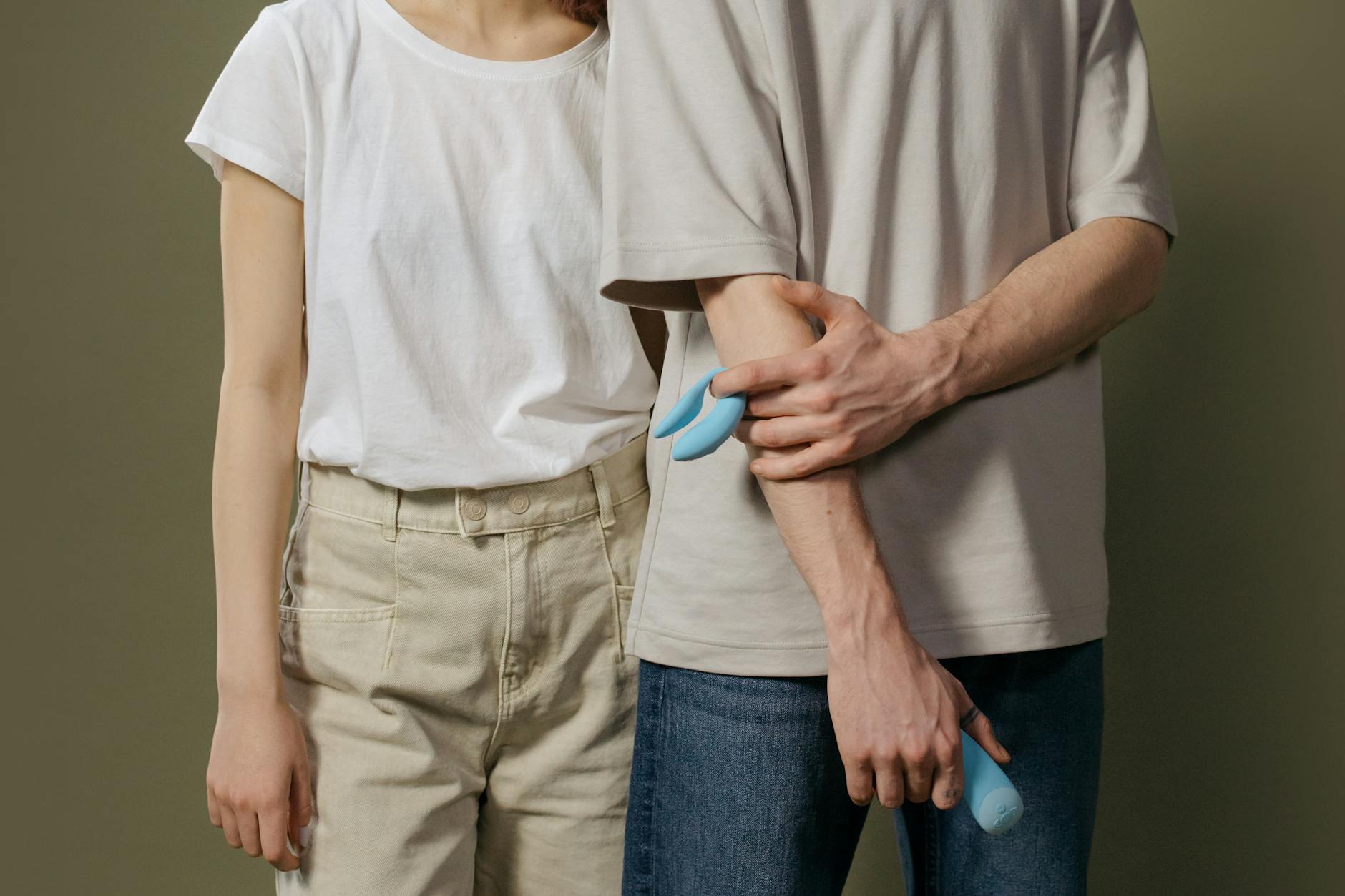
Do Lemon Vibrators Feel Different When You're Alone vs. With a Partner?
Here's something nobody tells you: your lemon clitoral vibrator doesn't actually change. But your nervous system does. The same suction-based stimulation that feels electric flying solo might feel muffled, delayed, or almost alien when your partner is watching. And vice versa. Both are real. Neither means something is broken.
I see this confusion constantly in my practice. Someone buys a Lem vibrator alone, has an incredible experience, then feels absolutely nothing when they introduce it to partnered play. They panic. They assume the toy stopped working or they've developed numbness. Usually it's neither. Their brain shifted contexts, and their entire sensory experience shifted with it.
Let's talk about what's actually happening, and how to work with it instead of against it.
How your nervous system changes between solo and partnered use
Your body has two main branches of the autonomic nervous system: the sympathetic (fight or flight) and the parasympathetic (rest and digest). Both affect sensation, arousal, and orgasm.
When you're alone, your parasympathetic nervous system typically dominates if you feel safe. Your body is in receiving mode. Breathing deepens, muscles relax, blood flow expands to the genitals. A lemon vibrator in this state feels like a direct conversation with your own pleasure.
When a partner is present, your sympathetic nervous system often activates, even if the relationship feels secure. There's a subtle awareness of being watched, performing, being desired. This isn't wrong. It's just different. Your body is partially in a state of arousal (heightened sensations, faster heartbeat) and partially in a state of mild alertness (monitoring your partner's reactions, managing vulnerability). That split attention genuinely mutes direct sensation.
Add shame, performance anxiety, or any doubt about your partner's acceptance of the toy, and your parasympathetic system shuts down almost completely. Your vagus nerve (the main highway of the parasympathetic system) constricts. Sensation dampens. Orgasm becomes nearly impossible, even though the lemon vibrator is working perfectly.
Why solo lemon vibrator sessions often feel more intense
There's no filter. Your entire brain is devoted to the sensation. No part of your mind is tracking whether you're being sexy enough, whether your partner is bored, whether this is the "right" way to react. The clitoral nerves get uninterrupted attention from your nervous system.
You can also take your time without any implicit pressure. If sensations need to build over 15 minutes instead of 5, there's no clock running. If you need to stop and restart, you can, without managing someone else's arousal state. That freedom itself is part of what makes the sensation feel so vivid.
Many of my clients report that their most satisfying orgasms happen solo, not because of anything the lemon vibrator does differently, but because the context removes every layer of self-monitoring.
Why lemon vibrators sometimes feel muted in partnered play
It's not the toy. It's your brain taking partial resources away from sensation and allocating them elsewhere: to reading your partner's expression, to managing vulnerability, to performing the role of someone who is turned on.
This is especially true in newer relationships or in partnerships where you haven't yet discussed this specific boundary. If a partner introduces a lemon vibrator without warning or context, the shock alone can flatten sensation for several minutes while your nervous system processes what's happening.
I've also seen this happen when there's an unspoken power dynamic in the room. If you sense (even incorrectly) that your partner doubts whether the toy will work, or whether they're supposed to step back and let you use it alone, that uncertainty creates nervous system noise. Your body is trying to solve a relational puzzle while also trying to experience pleasure. It can't do both well.
The partner presence paradox
Here's the weird part: with practice and emotional attunement, partnered lemon vibrator use can feel more intense than solo, not less.
When a partner understands their role (witness, not performer; present, not intrusive), something shifts. You get the benefit of the parasympathetic relaxation of being with someone you trust, plus the added arousal of being desired while you're vulnerable. The combination creates a different kind of pleasure. Not better or worse. Layered differently.
This requires explicit conversation, though. Your partner needs to know that their job is to create safety, not to perform arousal back at you. They might touch you, might not. They might talk, might be silent. The specifics matter less than the shared agreement about what this moment is for.
Adjustments that help bridge the gap
If lemon vibrators feel good alone and nothing happens when a partner is present, here are four things worth trying:
Start with the conversation before the toy comes out. Tell your partner what you want from the experience: Do you want them to touch you? Watch from a distance? Participate directly? Be silent? There's no right answer. Clarity removes the nervous system chatter.
Begin with longer warm-up time. Budget 10 minutes of partner touch before the lemon vibrator even appears. Let your parasympathetic nervous system come online with physical contact. Then introduce the toy as an extension of intimacy, not a replacement for it.
Use the toy on a lower setting initially. Your nervous system is processing more information than it would solo. Start at pattern 1 or 2 and let sensation build. You're not trying to replicate your solo experience. You're building a new one.
Practice staying in your body. If your mind drifts to self-judgment, gently return attention to physical sensation. Where do you feel the clitoral stimulation? How is your breath? What does your partner's hand feel like? Partnered pleasure requires staying present. It's a skill that builds with repetition.
When to use lemon vibrators solo versus with a partner
Honestly? Both. Solo sessions teach your body what it wants. Partnered sessions teach you how to stay present while being desired. Neither cancels out the other.
I recommend to clients that they learn their own pleasure cycle first before introducing toys to partnered play. You need a baseline. You need to know what your body responds to without any external pressure. Then, when you bring a lemon vibrator into partnered experience, you can speak from a place of knowing, not guessing.
If you're already in a relationship and curious about introducing a lemon clitoral vibrator, the conversation matters more than the toy itself. Bringing this up doesn't have to be awkward. Most partners are far more enthusiastic than you'd expect, once they understand that you're not replacing them. You're expanding the menu.
The nervousness is information, not a problem
If you feel vulnerable bringing a lemon vibrator into partnered play, that feeling is real and worth attending to. It often isn't about the toy. It's about trust, exposure, or the fear that your partner will judge what turns you on.
That's actually the most important conversation to have. Not about the toy. About whether you feel safe being fully yourself with this person. If you don't, no sex toy solves that. If you do, toys become a joy, not a performance.
Your pleasure matters whether you're alone or with someone else. The context changes the sensation, but it doesn't diminish the validity of what your body wants. That distinction is worth holding onto.
Frequently asked questions
Why does my lemon vibrator feel stronger when I'm alone?
Your parasympathetic nervous system is more active when you're solo and feel safe. This system handles relaxation and direct sensation. When a partner is present, part of your nervous system shifts to subtle alertness, even in secure relationships. That split attention reduces the intensity of sensation. It's neurobiology, not a sign something is wrong with you or the toy.
Can you become desensitized to lemon vibrators in partnered play?
Not in the way most people fear. You're not losing sensitivity. You're experiencing a different nervous system state. Your clitoral nerves don't change based on who's in the room. Your brain's allocation of attention does. If sensation feels muted consistently with a partner, the issue is usually emotional safety or unclear communication, not physical desensitization.
Is it normal to prefer solo lemon vibrator sessions?
Completely normal. Many people find that solo pleasure feels more intense, requires less emotional management, and delivers more consistent satisfaction. This doesn't mean you can't enjoy partnered play. It just means you understand yourself. Knowing this about yourself is useful information for conversations with partners about what you both want from intimacy.
How long does it take to feel comfortable using a lemon vibrator with a partner?
It depends entirely on your relationship foundation and communication. Some couples feel natural with it in weeks. Others take months. The variable isn't the toy. It's how quickly you can communicate about vulnerability and desire without shame. If you already talk openly about sex, introducing a lemon vibrator is straightforward. If that conversation feels scary, it's worth unpacking that first.
Does one partner using a lemon vibrator while the other watches feel like rejection?
It can, if the context isn't clear. If a partner introduces a toy without explanation, it might feel like they're choosing the toy over intimacy. But if there's been a conversation about it being an expansion of pleasure, not a replacement for them, most partners experience it as arousing or connective. The frame matters enormously.
What if my partner seems uncomfortable with my lemon vibrator?
That discomfort is worth exploring, not ignoring. Sometimes it's about insecurity ("Am I not enough?"). Sometimes it's about misunderstanding what the toy is for. Sometimes it's rooted in beliefs about sex toys being shameful. Conversation usually reveals it. Most resistance softens once a partner understands that you're not criticizing them or their role in your pleasure. You're enhancing it.
The bottom line: your lemon vibrator doesn't feel different. Your nervous system does. Understanding that difference is the key to pleasure that works solo and partnered. Both experiences are valid. Neither is the "real" one. They're just different chapters of the same story about what your body wants and deserves.